Embarking on the journey of vinyl playback is an immersive experience, yet unlocking its full potential hinges on a crucial, often overlooked step: perfecting your record player’s tonearm balance. An imbalanced tonearm can lead to distorted sound, premature record wear, and even damage to your precious stylus. But fear not, this isn’t a task reserved for audio engineers. With a little patience and the right guidance, you can master this DIY adjustment, ensuring your vinyl collection sounds its absolute best and lasts for years to come. This comprehensive guide will walk you through every step, transforming your listening experience from good to truly exceptional.
Understanding Your Record Player’s Tonearm
A record player, often referred to as a turntable, is a device specifically designed to reproduce sound from vinyl records. At its core, the system relies on a platter that spins the record, and a tonearm that holds the cartridge and stylus, guiding it precisely through the record’s grooves. The tonearm’s role is paramount; it supports the cartridge and stylus, allowing it to trace the delicate undulations of the record groove while applying the correct amount of downward pressure. This “correct pressure,” known as tracking force, is critical for accurate sound reproduction and preventing damage to both the record and the stylus.
The main components of a tonearm assembly typically include the tonearm itself, the headshell (where the cartridge is mounted), the cartridge with its stylus (needle), a counterweight at the rear of the tonearm, and often an anti-skate mechanism. The counterweight is a small, cylindrical mass used to achieve the initial balance of the tonearm, making it float level. The anti-skate mechanism applies an outward force to counteract the natural inward pull of the tonearm as the record spins, ensuring the stylus sits centrally in the record groove. Understanding these components is the first step toward mastering your record player’s setup.
Different tonearm designs, such as straight, S-shaped, or J-shaped, exist, each with specific ergonomic and engineering considerations. While the basic principles of balancing remain consistent, some designs might offer slightly different approaches to counterweight adjustment or anti-skate application. For instance, straight tonearms are often chosen for their directness and rigidity, while S-shaped arms can sometimes be preferred for minimizing tracking error. Regardless of the design, precision in balancing is key to optimal performance.
Guide to Achieving Perfect Tonearm Balance
Achieving the perfect tonearm balance is a multi-step process that demands attention to detail. It starts with ensuring your playback environment is stable and ends with fine-tuning the delicate forces at play. This guide breaks down the process into easy-to-follow steps, empowering you to perform this critical DIY adjustment with confidence.
Essential Preparations for Balancing
|
Our Picks for the Best Record Player in 2026
As an Amazon Associate I earn from qualifying purchases.
|
||
| Num | Product | Action |
|---|---|---|
| 1 | Vinyl Record Player with Speakers Vintage Turntable for Vinyls Records Belt-Driven Turn Table Support 3-Speed, Wireless Playback, Headphone, AUX-in, RCA Line LP Phonograph for Sound Enjoyment Black |

|
| 2 | Audio-Technica AT-LP60X-BK Fully Automatic Belt-Drive Stereo Turntable, Black, Hi-Fi, 2 Speed, Dust Cover, Anti-Resonance, Die-Cast Aluminum Platter |
|
| 3 | SoulBox S1 Vinyl Record Player with Stereo Speakers, Turntable with Built-in Preamp, S-Shaped Tonearm, 33/45 RPM - Walnut |
|
| 4 | Audio-Technica AT-LP60X-GM Fully Automatic Belt-Drive Stereo Turntable, Gunmetal/Black, Hi-Fidelity, Plays 33-1/3 and 45 RPM Vinyl Records, Dust Cover, Anti-Resonance, Die-Cast Aluminum Platter |
|
| 5 | Vinyl Record Player with Dual Stereo Bookshelf Speakers Vintage Turntable with Bluetooth Wireless Playback Belt Drive 3-Speed Playback Record Player Support RCA Out Auto Stop |
|
| 6 | Vinyl Record Player Turntable with Built-in Bluetooth Receiver & 2 Stereo Speakers, 3 Speed 3 Size Portable Retro Record Player for Entertainment and Home Decoration |
|
| 7 | Vinyl Record Player 3-Speed Bluetooth Suitcase Portable Belt-Driven Record Player with Built-in Speakers RCA Line Out AUX in Headphone Jack Vintage Turntable |
|
| 8 | Vintage Record Player with External Speakers Belt-Drive Turntable for Vinyl Records Dual Stereo Speakers LP Players Support 3 Speed 3 Size Wireless Playback AUX Headphone Input Auto Stop Wood Red |
|
| 9 | Victrola Journey Bluetooth Portable Suitcase Record Player – with Built-in Speakers, 3 Speed Vinyl Record Player, RCA Out, Headphone Jack (Smoky Blue) |
|
| 10 | Victrola The Quincy 6-in-1 Bluetooth Record Player & Multimedia Center with Built-in Speakers – 3-Speed Turntable, CD & Cassette Player, AM/FM Radio, Wireless Music Streaming (Mahogony) |
|
Before you even touch your tonearm, ensuring your turntable is perfectly level is paramount. A tilted turntable can introduce uneven pressure on the stylus, causing premature wear and affecting sound quality. You can use a small bubble level placed on the platter to check for levelness, adjusting the turntable’s feet as needed until the bubble is centered. If your turntable’s feet aren’t adjustable, you might use small shims under the turntable base.
Next, it’s essential to prepare the tonearm itself. Gently remove any stylus guard or protective cover from your cartridge’s stylus. Be extremely careful during this step, as the stylus is delicate and easily damaged. Locate your anti-skate adjustment dial or mechanism (if your record player has one) and set it to “0” or its lowest setting. This ensures that the anti-skate force does not interfere with the initial balancing of the tonearm, allowing it to float freely.
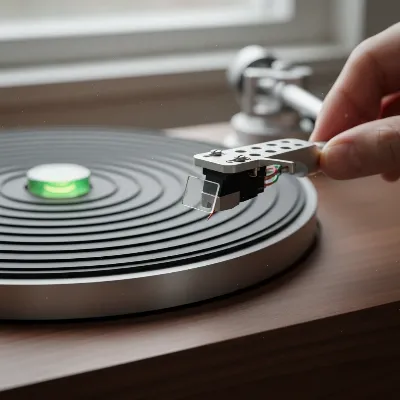 A close-up of a record player's platter with a bubble level, and a hand carefully removing a stylus guard from a cartridge, illustrating setup readiness for tonearm balancing.
The Step-by-Step Balancing Process
With your turntable level and initial preparations complete, it’s time to balance the tonearm. First, release the tonearm from its rest by disengaging the locking clamp. Using the cueing lever, gently raise the tonearm and position it over the platter, away from the tonearm rest. The tonearm will likely either drop towards the platter or lift away, indicating it’s out of balance. Your goal is to make it “float” perfectly horizontal, parallel to the platter, without any user intervention.
To achieve this neutral balance, slowly rotate the counterweight—the cylindrical piece at the back of the tonearm. Turning the entire counterweight clockwise typically makes the tonearm heavier at the back, causing the front (cartridge end) to lift. Conversely, turning it counter-clockwise makes the front heavier, causing it to drop. Make small, incremental adjustments, giving the tonearm time to settle after each turn. Patience is key here; a slight rotation can make a significant difference. Once the tonearm floats freely, perfectly horizontal to the platter, you have achieved zero balance.
After balancing the tonearm, carefully set the counterweight dial to zero without moving the main counterweight itself. Many counterweights have a numbered ring that can be rotated independently of the main weight. Hold the back of the counterweight steady and gently turn only the numbered dial until “0” aligns with the top (12 o’clock position) of the tonearm or a designated mark. This “zeros out” the tonearm, providing a reference point for setting the precise tracking force in the next step.
Setting the Tracking Force and Anti-Skate
With the tonearm balanced to zero, the next critical step is to set the tracking force. Tracking force is the downward pressure exerted by the stylus on the record groove, measured in grams. The optimal tracking force is usually recommended by the cartridge manufacturer and can be found in your cartridge’s specifications. If the tracking force is too low, the stylus might skip, causing distortion and potential record damage. If it’s too high, it can prematurely wear out both your stylus and your records.
To set the tracking force, gently turn the entire counterweight counter-clockwise (or as specified by your turntable’s manual) to apply the desired weight. Since your counterweight dial is now at zero, you can simply rotate the entire counterweight until the numbered dial indicates the manufacturer’s recommended tracking force (e.g., 1.5 grams, 2.0 grams). For absolute precision, especially with sensitive cartridges, using a digital stylus force gauge is highly recommended. Place the gauge on your platter (or record), lower the tonearm onto it, and adjust the counterweight until the gauge displays the exact recommended force.
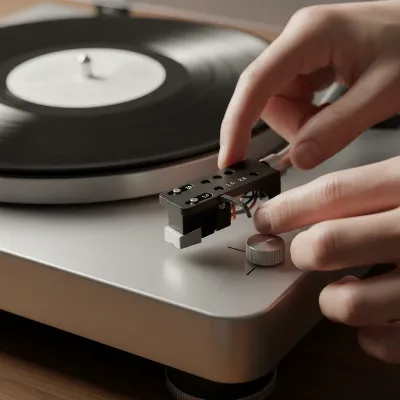 A turntable with a hand adjusting the counterweight for tracking force, and another hand adjusting the anti-skate dial, highlighting precision setup.
Finally, adjust the anti-skate setting. As mentioned, anti-skate counteracts the inward force that pulls the stylus towards the center of the record. Generally, the anti-skate setting should match the tracking force you’ve just set. For instance, if your tracking force is 2.0 grams, start by setting your anti-skate dial to “2.” Some turntables use a weighted string mechanism instead of a dial; consult your manual for proper setup. You can fine-tune anti-skate by observing if the tonearm drifts inward or outward when hovering over a smooth, ungrooved part of a record or a test record. Proper anti-skate ensures even wear on both sides of the record groove and balanced stereo imaging.
Choosing a Record Player for Optimal Tonearm Performance
While this guide focuses on DIY tonearm balancing, the quality and design of your record player’s tonearm significantly impact the ease and precision of this process. When considering a new record player, paying attention to its tonearm features can save you headaches and enhance your listening experience.
Key Factors for Tonearm Performance
The quality of a record player’s tonearm and the cartridge it comes with are fundamental to sound reproduction. Higher quality tonearms are often made with stiffer, lighter materials that minimize resonance and improve tracking stability. Look for tonearms that offer precise, easily adjustable counterweights and anti-skate mechanisms, ideally with clear numerical markings. Some budget turntables may have less precise adjustments or even fixed tonearm settings, which can limit your ability to fine-tune.
Adjustability features are paramount for DIY enthusiasts. A tonearm with a clearly marked, easily rotatable counterweight and a well-dampened anti-skate system makes the balancing process much more straightforward. Some high-end tonearms even offer Vertical Tracking Angle (VTA) adjustment, allowing you to set the stylus angle relative to the record surface, further optimizing playback for different record thicknesses. Your budget will naturally influence the level of precision and adjustability available. Entry-level players focus on ease of use, while mid-range to high-end models offer the granularity needed for audiophile-level adjustments.
Comparing Record Players by Tonearm Features
When evaluating record players, understanding the nuances of their tonearm systems can guide your decision, especially if you prioritize precise setup and optimal sound. While a detailed product-by-product comparison table is beyond the scope here, we can discuss the types of features to look for.
Detailed Comparison of Tonearm Systems
Record players differ significantly in their tonearm designs and adjustment capabilities. Entry-level models, such as many all-in-one suitcase players, might have basic, non-adjustable tonearms where tracking force is preset. While convenient, these often offer suboptimal performance and can be harsher on records. Stepping up, many mid-range turntables feature adjustable counterweights and anti-skate dials, providing the necessary tools for precise balancing. These often come with decent quality, pre-mounted cartridges that have recommended tracking force ranges, making DIY setup accessible.
High-end record players typically boast sophisticated tonearm systems crafted from advanced materials like carbon fiber or aluminum alloys, designed for ultra-low resonance and friction. They offer micro-adjustments for counterweight, anti-skate, and sometimes even VTA (Vertical Tracking Angle) and azimuth (stylus tilt). These precision mechanisms allow for incredibly fine-tuned setup, extracting every nuance from your vinyl. When comparing, consider the feel of the adjustments—do they turn smoothly and hold their position? Are the markings clear and easy to read? These small details contribute significantly to the DIY balancing experience.
Recommending Players for DIY Enthusiasts
For those who enjoy the hands-on aspect of audio setup, we recommend looking for record players that provide clear, independent adjustments for both tracking force and anti-skate. Brands like Rega, Pro-Ject, and Audio-Technica (in their higher-tier models) are often praised for their well-engineered tonearms that offer good adjustability without excessive complexity. Look for models where the counterweight dial is clearly numbered in grams and rotates smoothly. Furthermore, a tonearm with a removable headshell can be a bonus, allowing for easier cartridge swapping and more flexibility for future upgrades.
Where to Find Reliable Record Player Setup Resources
Beyond this guide, a wealth of resources exists to assist you in fine-tuning your record player. Engaging with online communities and forums dedicated to vinyl and hi-fi audio can provide invaluable insights and troubleshooting tips from experienced enthusiasts. Websites like Audiogon, Vinyl Engine, and various Reddit communities (e.g., r/vinyl, r/turntables) are excellent places to ask questions and share experiences.
For hands-on assistance or a second opinion, reputable brick-and-mortar audio stores often employ knowledgeable staff who can guide you through the setup process or even perform professional calibration for a fee. When purchasing a new record player, inquire about setup services; many specialized dealers offer this as part of their customer care. While buying online offers convenience, local stores provide invaluable expertise, especially for complex adjustments or troubleshooting specific issues related to your tonearm or cartridge.
Maintaining Your Record Player for Lasting Tonearm Health
Proper maintenance extends beyond the initial setup, ensuring your record player continues to deliver excellent sound and that your tonearm remains accurately calibrated. Regular care will protect your investment in both hardware and vinyl.
The tonearm’s balance and tracking force are not “set it and forget it” parameters. It’s a good practice to periodically check your tonearm’s balance and tracking force, especially if you move your turntable or notice any changes in sound quality. Even slight bumps can sometimes shift the counterweight. A quick re-check with your stylus force gauge ensures everything is still within the manufacturer’s recommendations. Regularly cleaning your stylus is also vital, as dirt and dust can accumulate, affecting its ability to track the groove correctly and potentially altering the effective tracking force. Use a soft stylus brush, brushing gently from back to front.
Beyond the stylus, keeping your records clean is equally important. Dust and debris on records can clog the stylus, increasing friction and potentially causing skipping or tracking issues for your tonearm. A good quality record brush and cleaning solution should be part of your routine. Finally, ensure your record player is always placed on a stable, level surface. Vibrations or an uneven surface can negatively impact tonearm performance and sound fidelity, undermining all your careful balancing efforts.
Tonearm-Related Accessories and Their Costs
Investing in a few key accessories can greatly enhance your record player setup and make tonearm balancing more precise and manageable.
For precision in setting tracking force, a digital stylus force gauge is indispensable. These typically range from $15 to $50 and offer highly accurate measurements, far more reliable than relying solely on counterweight markings. Record cleaning kits (brushes, cleaning fluids) are essential for maintaining both your records and stylus, preventing debris from interfering with tonearm tracking, usually costing between $20 and $60. A stylus brush (often included in cleaning kits) is also crucial for gentle stylus cleaning. Should your stylus wear out or get damaged, replacement styli vary widely in price, from $20 for basic conical styli to hundreds of dollars for advanced elliptical or Shibata designs, depending on your cartridge. A turntable level (around $5-$15) is also a cheap but vital tool for initial setup.
Buying Guide: Selecting a Record Player with Excellent Tonearm Adjustability
Choosing a record player with a well-designed and adjustable tonearm is a smart move for any vinyl enthusiast. This ensures you can fine-tune your setup for optimal sound and longevity.
Popular Tonearm Types and Their Impact
Tonearms generally come in a few popular configurations: straight, S-shaped, and J-shaped. Straight tonearms are often found on modern turntables, sometimes without an offset angle at the headshell. Their simplicity can contribute to rigidity, but they require a cartridge mounted at an angle (or an offset headshell) to achieve correct alignment. S-shaped and J-shaped tonearms inherently incorporate an offset angle, often making cartridge alignment straightforward with standard headshells. Each type has its proponents, but for DIY balancing, the key is the quality of the pivot bearings and the ease of counterweight and anti-skate adjustment, rather than the shape itself. Well-engineered bearings minimize friction, allowing the tonearm to move freely and track records accurately.
Choosing Based on Adjustability and Budget
When selecting a record player, consider the level of tonearm adjustability offered within your budget. For entry-level record players (under $200-$300), you might find pre-balanced tonearms with limited or no user adjustments for tracking force or anti-skate. While convenient, these often compromise sound quality and stylus/record longevity.
For mid-range record players ($300-$700), you should expect fully adjustable tonearms with a separate counterweight, a numbered tracking force scale, and an anti-skate mechanism. These models strike a good balance between performance, adjustability, and cost, making them excellent choices for DIY enthusiasts looking to optimize their sound.
In the high-end segment (over $700), tonearms feature sophisticated engineering, premium materials, and micro-adjustments for every parameter imaginable—tracking force, anti-skate, VTA, and azimuth. These offer the ultimate in fine-tuning, allowing audiophiles to extract the absolute best performance from their cartridges and records. Choosing a record player in this range means investing in superior tonearm precision and longevity.
Conclusion
Achieving perfect tonearm balance is more than just a technical chore; it’s a fundamental step in truly appreciating the nuanced sound of vinyl and safeguarding your cherished collection. By following the DIY steps outlined in this guide—from careful leveling and initial tonearm balancing to precise setting of tracking force and anti-skate—you empower yourself to unlock your record player’s full potential. This meticulous attention to detail ensures your stylus tracks the grooves flawlessly, delivering rich, distortion-free audio and extending the lifespan of both your records and equipment. Taking the time for these adjustments is a rewarding endeavor that deepens your connection to the analog listening experience. Are you ready to hear your vinyl like never before?
Frequently Asked Questions
Why is tonearm balance so critical for my record player?
Proper tonearm balance ensures the stylus applies the correct pressure to the record groove. Too little pressure can cause skipping and distortion, leading to harsh sound and potential record damage. Too much pressure can cause muffled sound, accelerate stylus wear, and prematurely degrade your records. Correct balance is key for optimal sound quality and longevity.
What tools do I need to balance my record player’s tonearm?
While some turntables can be balanced by eye and feel, for perfect precision, you’ll need a small bubble level for the turntable, and ideally, a digital stylus force gauge to accurately set the tracking force. A small screwdriver might be needed for some cartridge mounting, but not usually for tonearm balancing itself.
How often should I check my tonearm’s balance and tracking force?
It’s a good idea to check your tonearm’s balance and tracking force periodically, perhaps every few months, or if you notice any changes in playback quality, or after moving your turntable. Small vibrations or accidental bumps can sometimes shift the counterweight slightly, warranting a quick re-adjustment.
Can an improperly balanced tonearm damage my vinyl records?
Absolutely. A tonearm with insufficient tracking force can cause the stylus to “skip” or “bounce” within the groove, leading to scratches and permanent damage. Conversely, excessive tracking force grinds the stylus into the groove, causing accelerated wear on the record and reducing its lifespan.
What is anti-skate, and why is it important for tonearm setup?
Anti-skate is a mechanism that applies an outward force to the tonearm, counteracting the natural inward pull (skating force) caused by the stylus dragging in the record groove. Properly set anti-skate ensures the stylus tracks centrally within the groove, promoting even wear on both groove walls and preventing channel imbalance or distortion.
My tonearm doesn’t have a numbered counterweight dial. How do I set tracking force?
If your counterweight doesn’t have a numbered dial, you’ll need a digital stylus force gauge. First, balance the tonearm to float horizontally (zero balance). Then, lower the tonearm onto the force gauge and adjust the counterweight until the gauge reads the manufacturer’s recommended tracking force for your cartridge.
