There’s a unique warmth and depth to vinyl that digital formats simply can’t replicate. For many audiophiles, the ritual of dropping the needle onto a beloved record is a treasured experience. However, like any mechanical device, your record player requires occasional maintenance to keep those tunes spinning flawlessly. One of the most common issues you might encounter is a worn-out drive belt, which can significantly impact playback quality. While it might seem daunting, replacing a record player belt is a straightforward DIY task that can revive your turntable and restore its sonic brilliance. This comprehensive guide will walk you through every step, ensuring a safe and successful replacement, bringing your cherished vinyl collection back to life.
Understanding Your Record Player’s Drive System
Most modern record players utilize one of two primary drive systems: direct drive or belt drive. Direct drive turntables feature a motor directly beneath the platter, spinning it without an intermediary. Belt-drive record players, however, rely on a flexible rubber belt to connect the motor to the platter. This design is often favored for its ability to reduce motor noise and vibration from reaching the platter, resulting in cleaner audio reproduction.
Over time, this crucial rubber belt is subjected to constant tension and friction. Factors such as regular use, environmental conditions like heat and humidity, and simply the passage of time will cause the belt to stretch, lose its elasticity, or even crack and disintegrate. When the belt begins to degrade, it can no longer maintain a consistent grip on the motor pulley and platter, leading to a host of performance issues that compromise your listening pleasure.
Recognizing the Need for a New Belt
Identifying a worn-out record player belt early can save you from frustrating listening experiences and potential long-term damage to your turntable. There are several clear indicators, both visual and auditory, that signal it’s time for a replacement. Paying attention to these signs will help you diagnose the problem accurately.
Visual Cues
|
Our Picks for the Best Record Player in 2026
As an Amazon Associate I earn from qualifying purchases.
|
||
| Num | Product | Action |
|---|---|---|
| 1 | Audio-Technica AT-LP60X-GM Fully Automatic Belt-Drive Stereo Turntable, Gunmetal/Black, Hi-Fidelity, Plays 33-1/3 and 45 RPM Vinyl Records, Dust Cover, Anti-Resonance, Die-Cast Aluminum Platter |

|
| 2 | Victrola The Quincy 6-in-1 Bluetooth Record Player & Multimedia Center with Built-in Speakers – 3-Speed Turntable, CD & Cassette Player, AM/FM Radio, Wireless Music Streaming (Mahogony) |
|
| 3 | Victrola Journey Bluetooth Portable Suitcase Record Player – with Built-in Speakers, 3 Speed Vinyl Record Player, RCA Out, Headphone Jack (Smoky Blue) |
|
| 4 | Vinyl Record Player with Speakers Vintage Turntable for Vinyls Records Belt-Driven Turn Table Support 3-Speed, Wireless Playback, Headphone, AUX-in, RCA Line LP Phonograph for Sound Enjoyment Black |
|
| 5 | SoulBox S1 Vinyl Record Player with Stereo Speakers, Turntable with Built-in Preamp, S-Shaped Tonearm, 33/45 RPM - Walnut |
|
| 6 | Vinyl Record Player with Dual Stereo Bookshelf Speakers Vintage Turntable with Bluetooth Wireless Playback Belt Drive 3-Speed Playback Record Player Support RCA Out Auto Stop |
|
| 7 | Vinyl Record Player 3-Speed Bluetooth Suitcase Portable Belt-Driven Record Player with Built-in Speakers RCA Line Out AUX in Headphone Jack Vintage Turntable |
|
| 8 | Vintage Record Player with External Speakers Belt-Drive Turntable for Vinyl Records Dual Stereo Speakers LP Players Support 3 Speed 3 Size Wireless Playback AUX Headphone Input Auto Stop Wood Red |
|
| 9 | Audio-Technica AT-LP60X-BK Fully Automatic Belt-Drive Stereo Turntable, Black, Hi-Fi, 2 Speed, Dust Cover, Anti-Resonance, Die-Cast Aluminum Platter |
|
| 10 | Vinyl Record Player Turntable with Built-in Bluetooth Receiver & 2 Stereo Speakers, 3 Speed 3 Size Portable Retro Record Player for Entertainment and Home Decoration |
|
A quick visual inspection of your record player’s belt can often reveal the underlying problem. Look for any visible signs of degradation, which are usually quite distinct. If the belt appears cracked, frayed, or has become visibly stretched and loose, it’s a clear sign of wear and tear. You might also notice black, gooey residue or crumbly bits of rubber around the motor pulley or under the platter, indicating the belt is deteriorating. A belt that has lost its original elasticity might also feel limp or sag noticeably when removed.
Audio Symptoms
Beyond what you can see, a failing belt will often make its presence known through changes in your record player’s sound. Inconsistent playback speed is a primary symptom; records might sound faster or slower than they should, causing instruments and vocals to be out of tune. You might also experience “wow and flutter,” which manifests as a wavering or unstable pitch, particularly noticeable during sustained notes in vocals or piano pieces. These subtle shifts in pitch are a tell-tale sign that the belt is struggling to maintain a constant speed.
No Rotation
The most unmistakable sign that your record player belt needs immediate attention is when the platter simply refuses to spin, or only moves sluggishly, despite the motor running. If you power on your turntable and the platter remains stationary or struggles to rotate even with a gentle nudge, it’s highly probable that the belt has either snapped, completely lost tension, or slipped off the motor pulley entirely. This usually indicates the belt has reached the end of its functional life and requires immediate replacement to resume playback.
Gathering Your Tools and Preparing the Workspace
Before embarking on the belt replacement process, it’s essential to gather all necessary tools and prepare a clean, organized workspace. Proper preparation ensures a smooth and safe procedure, minimizing the risk of damaging your record player’s delicate components. Having everything at hand will allow you to work efficiently and with confidence.
Essential Supplies
To successfully replace your record player’s drive belt, you’ll need a few key items. First and foremost, acquire the correct replacement belt for your specific turntable model. Belts vary in size, thickness, and material, so consulting your record player’s manual or the manufacturer’s website for compatibility is crucial. You’ll also need a soft, lint-free cloth and isopropyl alcohol (rubbing alcohol) for cleaning. Depending on your turntable’s design, a small screwdriver might be necessary to remove any clips or screws securing the platter. Consider wearing gloves to keep oils from your hands off the new belt.
Setting Up Safely
Before you begin any work on your record player, always ensure it is unplugged from the power outlet. This critical safety step prevents any risk of electrical shock. Choose a clean, flat, and well-lit surface for your workspace, such as a sturdy table or workbench. Clear away any clutter that could get in the way or cause you to accidentally knock over components. Lay down a soft towel or mat to protect both your record player and the surface you are working on. This attention to detail ensures a secure environment for the repair.
Step-by-Step Guide: Replacing Your Record Player Belt
Replacing the drive belt on your record player is a relatively straightforward process once you understand the core steps. Patience and careful handling are key to ensuring a successful outcome. Follow these instructions meticulously to restore your turntable to optimal working condition.
Initial Disassembly
Start by gently removing the felt or rubber mat that sits on top of your record player’s platter. Set it aside in a safe, clean place. Next, you’ll need to remove the platter itself. Many platters simply lift straight up from the center spindle. However, some models may have a C-clip, retaining ring, or small screws holding them in place, which you might need to carefully remove with a small screwdriver. Lift the platter slowly and evenly to avoid bending the spindle or damaging the bearing. Place the platter upside down on your protected workspace.
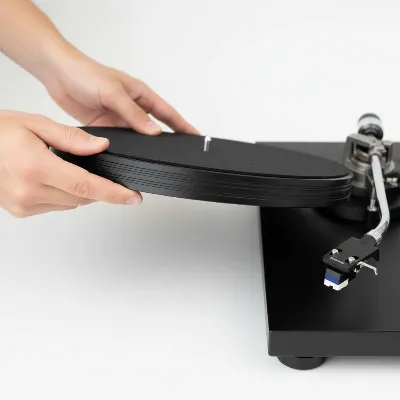 Removing the platter from a belt-drive record player to access the old belt.
Removing and Cleaning
Once the platter is removed, you will likely see the old drive belt, which might be stretched around the sub-platter (a smaller disc beneath the main platter) or lying loosely on the turntable base. Carefully remove the old belt. If it has degraded, you may find black, powdery, or sticky residue on the motor pulley and the inner rim of the platter where the belt usually sits. Use your lint-free cloth dampened with isopropyl alcohol to thoroughly clean both the motor pulley/spindle and the inner rim of the platter. This removes any old belt residue and ensures optimal grip for the new belt, preventing slippage and extending its life.
Installing the New Belt
With the platter still upside down, carefully take your new, correctly sized drive belt. Stretch it evenly around the sub-platter or the designated drive rim on the underside of the main platter. Ensure that the belt lies flat and is not twisted or kinked at any point. It should fit snugly without being overly tight. Some platters have a circular ridge to guide the belt, ensuring it’s centered as much as possible. This step sets the foundation for proper belt tension and rotation.
Connecting to the Motor
Now, carefully flip the platter back over and gently place it back onto the turntable spindle. Do not press it down firmly yet if there’s resistance. Rotate the platter slowly by hand until one of the access holes (if your platter has them) aligns with the motor spindle – the small metal shaft that protrudes from the turntable base. Using your fingers or a small hook tool, carefully pull the new belt through the access hole and stretch it around the motor spindle. Ensure it sits securely on the spindle and is not twisted. If your platter lacks access holes, you may need to manually rotate the platter several times after placing it back down to “catch” the belt onto the motor spindle.
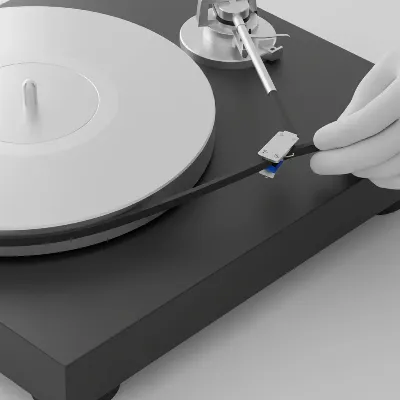 Installing a new drive belt on a record player's sub-platter and motor pulley.
Reassembly and First Test
Once the new belt is properly seated around both the platter’s rim and the motor spindle, ensure the platter is fully seated on the main spindle. Reattach any clips or screws you removed earlier. Replace the felt or rubber mat on the platter. Now, manually spin the platter a few times in both directions. You should feel a consistent, light resistance, indicating that the belt is engaging correctly. Finally, plug your record player back into the power outlet and power it on. Play a record to confirm that the speed is consistent and the sound quality has improved. If your turntable has an automatic cycle mechanism, you might need to reset it by unplugging, pressing STOP, rotating the platter clockwise 10 times, then plugging back in and pressing START.
Troubleshooting Common Issues After Belt Replacement
Even with careful execution, sometimes issues can arise after replacing your record player belt. Don’t be discouraged if your turntable doesn’t perform perfectly on the first try. Many common problems have simple solutions. The key is to systematically check each component and connection, just as you did during the installation process. Often, a small adjustment can make a big difference in restoring proper function.
If the platter is not spinning, or is spinning inconsistently, the most likely culprits are an improperly seated belt or a belt with incorrect tension. First, ensure the belt is not twisted or kinked. If it appears loose, it might not be fully stretched around both the platter’s inner rim and the motor spindle. Re-open the turntable and visually inspect the belt’s path, making sure it’s centered on both components. If the belt feels too tight, it could be straining the motor or preventing free rotation, indicating the replacement belt might be the wrong size; in this case, a different belt matching your model’s specifications may be required.
Maintaining Your Record Player for Optimal Belt Life
Regular maintenance is crucial for extending the life of your new record player belt and ensuring your turntable continues to deliver excellent sound quality for years to come. A little preventative care can go a long way in avoiding frequent belt replacements and other performance issues. Simple habits can significantly impact the longevity and reliability of your vinyl playback system.
Keep your turntable and its components clean. Dust and grime can accumulate on the platter’s rim and the motor pulley, creating friction and causing the belt to slip or wear out prematurely. Use a soft, lint-free cloth to gently wipe down these areas periodically. When handling the belt, always be gentle and avoid overstretching it, as this can permanently alter its elasticity. If you store your record player for extended periods, or transport it, consider removing the belt and storing it separately to relieve tension and prevent deformation. Understanding your record player’s parts and how they interact will empower you to perform proactive maintenance.
Sourcing the Right Replacement Belt for Your Turntable
Finding the correct replacement belt is perhaps the most critical step in this DIY process. Using an unsuitable belt can lead to poor performance, speed inaccuracies, or even damage to your record player’s motor. Turntable belts are not universal; they vary significantly in length, width, and thickness, each designed to precise specifications for different models. A belt that is too loose will slip, causing speed variations, while one that is too tight will put excessive strain on the motor, potentially leading to overheating or premature failure.
The best way to find the right belt is to consult your record player’s user manual or the manufacturer’s website. They often provide specific part numbers or dimensions for compatible replacement belts. If you still have the old belt, you can measure its length and cross-section, but be aware that a stretched belt might give an inaccurate reading. Specialized audio retailers, both online and in brick-and-mortar stores, are excellent resources for finding genuine or high-quality aftermarket belts. Always prioritize a belt that precisely matches your turntable’s model to ensure optimal performance and longevity.
Conclusion
Replacing your record player’s drive belt is a manageable and rewarding DIY project that can significantly extend the life of your turntable and vastly improve your listening experience. By understanding the importance of the drive system, recognizing the signs of wear, and following a methodical step-by-step approach, you can confidently tackle this common maintenance task. Regular cleaning and careful handling will ensure your new belt performs optimally for years to come, keeping the rich, warm sound of your vinyl collection alive. So, don’t let a sluggish spin deter you; embrace the satisfaction of bringing your beloved record player back to peak condition. What’s the first record you’ll spin on your newly revitalized turntable?
Câu Hỏi Thường Gặp
How often should a record player belt be replaced?
The lifespan of a record player belt typically ranges from 1 to 5 years, depending on factors like usage frequency, environmental conditions (heat, humidity), and the quality of the belt itself. Regular inspection for visible wear or changes in sound quality is recommended.
Can I use any rubber band as a replacement belt?
No, it is strongly advised against using a standard rubber band. Turntable belts are specifically engineered with precise dimensions, elasticity, and material composition to maintain consistent speed and minimize vibrations. Using an incorrect belt can damage the motor or lead to poor sound quality.
What are the main signs of a worn-out record player belt?
Key signs include inconsistent playback speed, records playing too fast or too slow, noticeable “wow and flutter” (wavering pitch), the platter not spinning despite the motor running, or visible cracks, stretching, or deterioration of the belt itself.
How do I ensure I buy the correct replacement belt?
Always refer to your Record Player’s user manual or the manufacturer’s official website for the exact model number and specifications of the replacement belt. If the original belt is intact, you can measure its length and cross-section, but be aware it might be stretched.
Is cleaning the motor pulley important during belt replacement?
Yes, it is crucial to clean the motor pulley and the inner rim of the platter thoroughly with isopropyl alcohol. Old belt residue, dust, or grime can cause the new belt to slip, reducing performance and potentially shortening its lifespan.