Dust, grime, and microscopic debris are the silent adversaries of any vinyl enthusiast, often settling on the delicate stylus of a record player. This tiny component, often overlooked until sound quality diminishes, is crucial for translating the intricate grooves of your cherished records into the rich, warm audio you love. A dirty needle can transform your listening experience from pure bliss to a symphony of pops, crackles, and muffled tones, not to mention potentially damaging your valuable vinyl. Understanding how to safely and effectively clean your record player needle is not just a chore; it is an essential ritual for preserving your equipment, protecting your records, and ensuring every note is heard with the clarity it deserves.
Why a Clean Record Player Needle is Essential for Vinyl Enthusiasts
The stylus, or needle, is the only part of your turntable that makes direct contact with the record grooves, acting as the primary transducer of sound. Its pristine condition is paramount for faithful audio reproduction. Neglecting this small but mighty component can lead to a cascade of issues that undermine your entire analog setup.
Elevating Your Listening Experience
|
Our Picks for the Best Record Player in 2026
As an Amazon Associate I earn from qualifying purchases.
|
||
| Num | Product | Action |
|---|---|---|
| 1 | Victrola The Quincy 6-in-1 Bluetooth Record Player & Multimedia Center with Built-in Speakers – 3-Speed Turntable, CD & Cassette Player, AM/FM Radio, Wireless Music Streaming (Mahogony) |

|
| 2 | Victrola Journey Bluetooth Portable Suitcase Record Player – with Built-in Speakers, 3 Speed Vinyl Record Player, RCA Out, Headphone Jack (Smoky Blue) |
|
| 3 | Audio-Technica AT-LP60X-BK Fully Automatic Belt-Drive Stereo Turntable, Black, Hi-Fi, 2 Speed, Dust Cover, Anti-Resonance, Die-Cast Aluminum Platter |
|
| 4 | SoulBox S1 Vinyl Record Player with Stereo Speakers, Turntable with Built-in Preamp, S-Shaped Tonearm, 33/45 RPM - Walnut |
|
| 5 | Vinyl Record Player with Dual Stereo Bookshelf Speakers Vintage Turntable with Bluetooth Wireless Playback Belt Drive 3-Speed Playback Record Player Support RCA Out Auto Stop |
|
| 6 | Vinyl Record Player 3-Speed Bluetooth Suitcase Portable Belt-Driven Record Player with Built-in Speakers RCA Line Out AUX in Headphone Jack Vintage Turntable |
|
| 7 | Audio-Technica AT-LP60X-GM Fully Automatic Belt-Drive Stereo Turntable, Gunmetal/Black, Hi-Fidelity, Plays 33-1/3 and 45 RPM Vinyl Records, Dust Cover, Anti-Resonance, Die-Cast Aluminum Platter |
|
| 8 | Vinyl Record Player with Speakers Vintage Turntable for Vinyls Records Belt-Driven Turn Table Support 3-Speed, Wireless Playback, Headphone, AUX-in, RCA Line LP Phonograph for Sound Enjoyment Black |
|
| 9 | Vintage Record Player with External Speakers Belt-Drive Turntable for Vinyl Records Dual Stereo Speakers LP Players Support 3 Speed 3 Size Wireless Playback AUX Headphone Input Auto Stop Wood Red |
|
| 10 | Vinyl Record Player Turntable with Built-in Bluetooth Receiver & 2 Stereo Speakers, 3 Speed 3 Size Portable Retro Record Player for Entertainment and Home Decoration |
|
A clean stylus ensures accurate contact with the record’s microscopic grooves, allowing it to retrieve the full spectrum of audio information. When dirt accumulates, it acts as a barrier, preventing the stylus from accurately tracking the groove walls. This interference results in noticeable distortion, a muddy or muffled sound, and a significant loss of clarity and detail in your music. Regular cleaning restores the stylus’s ability to precisely follow the grooves, bringing back the vibrant highs, clear mids, and deep lows that make vinyl listening so captivating.
Protecting Your Prized Vinyl Collection
Beyond sound quality, a dirty stylus poses a serious threat to your records. Dust and debris on the needle act like abrasive sandpaper, grinding against the delicate vinyl grooves as the record spins. Each pass of a contaminated stylus can inflict irreversible wear and tear, leading to permanent damage, increased surface noise, and a diminished lifespan for your collection. By keeping your stylus spotless, you safeguard your vinyl investment, ensuring your records remain in excellent condition for years of enjoyment.
Extending the Life of Your Stylus
The stylus itself is a precision instrument, typically made from diamond or sapphire, and designed for thousands of hours of playback. However, consistent exposure to dirt and grime accelerates its wear. A dirty needle has to work harder to track the grooves, leading to premature degradation of the stylus tip. Regularly cleaning your stylus not only maintains optimal sound but also prolongs its functional life, saving you the cost and hassle of frequent replacements.
Recognizing a Dirty Stylus: Visual and Auditory Cues
Identifying a dirty stylus is the first step towards rectifying the problem. Sometimes, the issue is visibly obvious, while other times, your ears will be the first to alert you. Being attuned to these signs helps you intervene promptly, preventing further damage and preserving your listening pleasure.
What to Look For: The Visual Signs
The most straightforward way to check for a dirty stylus is through visual inspection. Gently raise your tonearm and carefully observe the stylus tip. You might notice a visible clump of dust, lint, or debris clinging to the diamond tip or the cantilever (the tiny arm that holds the stylus). This buildup, sometimes referred to as a “dust bunny” or “dust comet,” is a clear indicator that cleaning is needed. For a closer look, especially if you have an Onzow ZeroDust cleaner, a small magnifying glass can be incredibly helpful, revealing microscopic particles that are invisible to the naked eye.
Listening for Trouble: Auditory Indicators
Your ears are excellent diagnostic tools when it comes to stylus cleanliness. If you start noticing changes in your turntable’s playback, a dirty stylus might be the culprit. Common auditory cues include:
- Muffled or Muted Treble: A lack of crispness or clarity in the higher frequencies, making the music sound dull.
- Increased Surface Noise: More frequent or pronounced crackles, pops, and static than usual, even on clean records.
- Distortion: A fuzzy or unclear sound, particularly during louder passages or vocal sibilance.
- Skipping or Mistracking: The needle jumping out of the groove, causing the music to skip forward or repeat sections. This is a critical sign that a dirty stylus is impeding proper tracking.
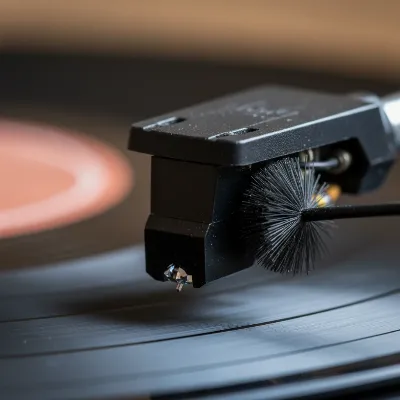 Close-up of a record player stylus being gently cleaned with a dedicated carbon fiber brush, showing the intricate detail of the needle and bristles under soft studio lighting.
Essential and Safe Tools for DIY Stylus Cleaning
Cleaning your stylus doesn’t require elaborate equipment, but using the right tools is crucial for both effectiveness and safety. There are several popular and trusted methods, each with its own advantages.
The Dedicated Stylus Brush
A specialized stylus brush, typically made with ultra-fine carbon fiber bristles, is often considered the most traditional and essential tool for routine maintenance. These brushes are designed to gently sweep away dust and loose debris without harming the delicate stylus tip or cantilever. Many audiophiles recommend using a stylus brush before or after every listening session for quick touch-ups.
The Magic Eraser Method
The “Magic Eraser” method, utilizing a small piece of melamine foam (like Mr. Clean Magic Eraser), has become a popular DIY technique. Melamine foam has a micro-abrasive texture that effectively lifts dirt and grime from the stylus. It’s an inexpensive and widely available option, making it a favorite among vinyl enthusiasts for a quick yet effective clean.
Innovative Gel Cleaners
Products like the Onzow ZeroDust have revolutionized stylus cleaning with their unique gel-based approach. These cleaners feature a soft, sticky polymer gel pad onto which you gently lower your stylus. The gel adheres to and lifts debris from the stylus tip without requiring any brushing or liquids, offering a “touchless” cleaning experience that many find reassuringly safe. These pads can often be rinsed with warm water and reused many times, providing long-term value.
Stylus Cleaning Fluids: When and How to Use
While dry cleaning methods are excellent for daily maintenance, dedicated stylus cleaning fluids offer a deeper clean for stubborn grime. These specialized solutions are formulated to dissolve hardened deposits without damaging the stylus or the adhesive that binds it to the cantilever. It’s vital to use only fluids specifically designed for styli and to apply them sparingly with a stylus brush, following the manufacturer’s instructions.
Step-by-Step Guide to Safely Cleaning Your Record Player Needle
Cleaning your stylus might seem intimidating due to its fragility, but by following these gentle, step-by-step instructions, you can ensure a safe and effective clean.
Preparation: Setting the Stage for Safe Cleaning
Before you begin, ensure your turntable is turned off to prevent any accidental movement or engagement of the platter. Gently raise the tonearm and secure it in its rest to prevent it from swinging freely. Always work in a well-lit area, and if possible, use a magnifying glass for better visibility of the stylus. Remember that the stylus and cantilever are extremely delicate, so a light touch is paramount.
Technique 1: Using a Stylus Brush
- Position: With the tonearm secured, position the stylus brush directly in front of the stylus tip.
- Direction: Gently move the brush from the back of the stylus towards the front. This motion mimics the direction of record play and prevents pushing debris further up the cantilever.
- Pressure: Apply a very light touch. Do not press down or brush side-to-side, as this can bend or damage the cantilever.
- Repeat: Perform several gentle sweeps until you observe no more visible debris on the stylus.
Technique 2: The Magic Eraser Approach
- Prepare the Eraser: Cut a small, approximately 1-inch square piece from a white Mr. Clean Magic Eraser. Ensure you use only the white, untreated side. Do NOT wet the eraser.
- Placement: Place the small piece of melamine foam on your turntable’s platter or plinth, in a spot easily accessible by the stylus.
- Lower Gently: Carefully lower the tonearm, allowing the stylus to gently dip into the surface of the Magic Eraser. Do not press down. Let the weight of the tonearm do the work.
- Lift and Repeat: Lift the tonearm, then repeat the dipping process two to three times until the stylus appears clean. The micro-abrasive material will gently lift the debris.
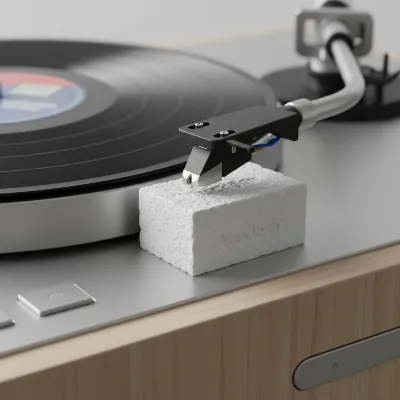 Record player stylus gently touching a small white piece of Mr. Clean Magic Eraser on a turntable platter, illustrating a common DIY cleaning method with soft, even lighting.
Technique 3: Employing a Gel Cleaner
- Placement: Place the gel cleaner (e.g., Onzow ZeroDust) on a stable, flat surface on your turntable, such as the platter or plinth.
- Dip Gently: Carefully lower the tonearm, allowing the stylus to gently touch the surface of the gel pad. The stylus should sink slightly into the soft gel.
- Lift and Repeat: Lift the tonearm straight up. Repeat this dipping and lifting action a few times. The gel’s adhesive properties will pull dirt and dust from the stylus tip.
- Maintenance: If the gel pad itself becomes visibly dirty, most can be refreshed by rinsing under warm water.
Technique 4: Applying Stylus Cleaning Fluid
- Apply Fluid: Put one or two small drops of a dedicated stylus cleaning fluid onto a clean stylus brush. Avoid directly applying fluid to the stylus or cartridge.
- Brush Gently: Using the same back-to-front motion as with a dry brush, gently sweep the fluid-dampened brush across the stylus tip.
- Wipe Excess (if needed): Some fluids are designed to evaporate quickly. If any residue remains, a final gentle pass with a dry stylus brush can help.
What NOT to Use: Avoiding Damage to Your Delicate Stylus
While DIY methods can be effective, certain substances and techniques can cause irreparable harm to your stylus. Knowing what to avoid is just as important as knowing what to use.
Harsh Chemicals and Alcohol
Never use isopropyl alcohol (IPA) or other harsh household cleaning chemicals directly on your stylus, unless specifically instructed by your cartridge manufacturer and only if it’s a dedicated stylus cleaning solution that lists these ingredients. Some stylus assemblies use adhesives that can be dissolved by alcohol, leading to the stylus detaching from the cantilever. Furthermore, strong chemicals can degrade the stylus suspension or other delicate components within the cartridge.
Improper Brushing Techniques
Avoid brushing your stylus from side to side or with excessive pressure. The cantilever is extremely fragile and can easily be bent or broken if subjected to lateral force or undue stress. Always brush in a single direction, from back to front, using the lightest possible touch.
Household Items and Fingers
Resist the temptation to use cotton swabs, tissues, clothing, or even your finger to clean the stylus. Cotton fibers can break off and get tangled around the stylus, or worse, get compacted onto the tip. Your fingers contain natural oils and contaminants that will only transfer more dirt onto the stylus. Always opt for specialized tools designed for this delicate task.
Frequency and Best Practices for Stylus Maintenance
Consistent maintenance is key to enjoying your vinyl collection at its best. Establishing a routine for stylus cleaning will yield significant benefits.
How Often Should You Clean Your Stylus?
The ideal cleaning frequency depends on your listening habits and the cleanliness of your records. A good rule of thumb is:
- Routine: A quick brush before or after every record side, or every few listening sessions, is beneficial for removing loose dust.
- Regular Listeners: For those who play records frequently, a more thorough cleaning (e.g., with a Magic Eraser or gel cleaner) once a week is recommended.
- Dirty Records: If you often play older or visibly dusty records, increase your cleaning frequency.
- Auditory Cues: Whenever you notice a drop in sound quality or signs of mistracking, inspect and clean your stylus immediately.
Proactive Measures to Prevent Dirt Buildup
Prevention is the best medicine for stylus care. Implementing these practices can significantly reduce how often you need to clean your needle:
- Clean Your Records: Always clean your vinyl records before playing them. A carbon fiber record brush can remove surface dust, and a deeper wet cleaning can tackle ingrained grime. Clean records directly translate to a cleaner stylus.
- Use a Dust Cover: Keep your turntable covered with a dust cover when not in use. This simple step protects both the platter and the stylus from airborne dust and particles.
- Maintain a Clean Environment: A relatively dust-free listening area will naturally reduce the amount of debris that can settle on your equipment.
Knowing When It’s Time for a Stylus Replacement
Even with diligent cleaning, styli wear down over time. Most diamond styli are rated for 500 to 1,000 hours of playback. Signs that your stylus may need replacement include:
- Persistent distortion or sibilance, even after cleaning and on clean records.
- Increased skipping or mistracking.
- A visibly worn, chipped, or bent stylus tip (requires close inspection, ideally with a magnifying glass).
- A noticeable decline in overall sound clarity and detail that cleaning cannot remedy.
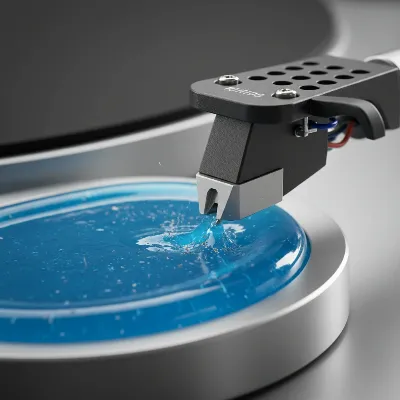 Close-up of a record player stylus gently dipping into the sticky surface of a gel cleaner (e.g., Onzow ZeroDust), demonstrating effective and safe dust removal, with soft background blur.
Expert Insights for Maintaining Optimal Playback
Maintaining your record player’s needle is a fundamental aspect of the vinyl experience, often emphasized by audio professionals.
“A clean stylus is the foundation of exceptional analog sound. It’s the critical interface between the music etched in the grooves and the amplifier. Neglecting it is like driving a sports car with flat tires—you simply won’t get the performance it’s capable of.” – Mark Jenkins, Audio Equipment Technician
The meticulous care of your stylus ensures that the intricate soundscapes of your records are reproduced with fidelity and warmth. By adopting these cleaning and maintenance routines, you are not just preserving equipment; you are upholding the integrity of the art form itself, ensuring that every listening session is as rewarding as the artists intended.
Cleaning your record player needle is a small act with profound implications for your vinyl listening experience. By understanding why a clean stylus matters, recognizing the signs of a dirty one, employing safe and effective cleaning tools and techniques, and adhering to regular maintenance, you ensure the longevity of your equipment and the pristine quality of your records. Embrace this ritual, and you’ll unlock the full, rich potential of your analog sound, making every spin a truly immersive journey. What other small rituals have enhanced your vinyl enjoyment?
Frequently Asked Questions
What causes a record player needle to get dirty?
A record player needle, or stylus, primarily gets dirty from dust, lint, and microscopic debris present on vinyl records and in the surrounding air. As the stylus tracks the record grooves, it accumulates these particles, especially if records are not regularly cleaned or if the listening environment is dusty.
Can a dirty needle damage my records?
Yes, a dirty needle can absolutely damage your records. The accumulated dust and grime act as an abrasive between the stylus and the record grooves, causing premature wear and permanent micro-scratches over time. This damage can lead to increased surface noise, distortion, and a degraded listening experience.
How often should I replace my record player needle?
The lifespan of a Record Player needle typically ranges from 500 to 1,000 hours of play, depending on its quality and how well it’s maintained. Regular cleaning and playing clean records can help extend its life, but eventually, the diamond tip will wear, requiring replacement to prevent damage to your records and maintain sound quality.
Is isopropyl alcohol safe for cleaning a stylus?
Generally, no. While some specialized stylus cleaning fluids may contain alcohol, using pure isopropyl alcohol (IPA) or other harsh chemicals is generally not recommended. Alcohol can dissolve the adhesive bonding the stylus to the cantilever, causing it to detach, or potentially damage delicate components within the cartridge. Always use products specifically designed for stylus cleaning.
What’s the best way to inspect my stylus for dirt?
The best way to inspect your stylus for dirt is by gently raising the tonearm and visually examining the stylus tip under good lighting. For a more thorough inspection, a small magnifying glass (often included with gel cleaners like Onzow ZeroDust) is highly recommended. Look for any visible clumps of dust, lint, or hardened grime on the diamond tip or cantilever.