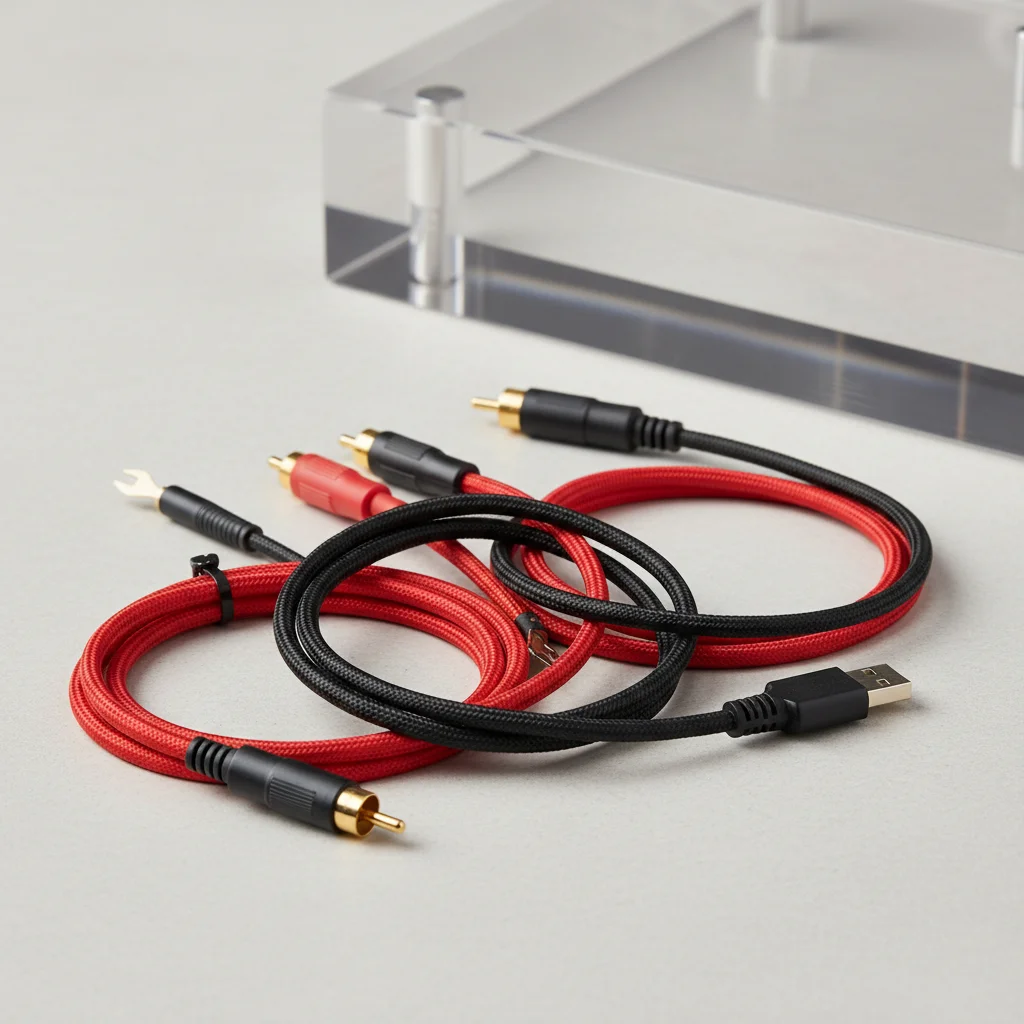
Yes, record player cables can significantly affect sound quality, particularly the interconnects between your turntable, preamp, and amplifier. While often overlooked, the quality of these cables can introduce noise, degrade signal integrity, and ultimately diminish the richness and clarity of your vinyl playback. There are three primary ways cables impact your audio: shielding, conductor material, and capacitance.
The Role of Shielding in Audio Cables
Shielding is crucial for protecting the delicate audio signal from external electromagnetic interference (EMI) and radio frequency interference (RFI). Poorly shielded cables can act as antennas, picking up stray electrical noise from household appliances, Wi-Fi routers, and even power lines. This interference manifests as hum, buzz, or static in your audio, detracting from the music. High-quality cables typically feature braided or foil shielding, sometimes even a combination, to create a robust barrier against these unwanted signals. Double shielding offers superior protection, especially in environments with high electrical noise.
Conductor Material and Its Impact
The material used for the cable’s conductors directly influences how efficiently and accurately the audio signal is transmitted. Copper is the most common conductor material due to its excellent conductivity. However, the purity of the copper varies. Oxygen-Free Copper (OFC) is a popular choice, as the absence of oxygen reduces impurities that can impede signal flow and introduce distortion. Silver-plated copper and pure silver conductors are also used in higher-end cables, offering even better conductivity and often resulting in a brighter, more detailed sound, though at a higher cost. The gauge (thickness) of the conductor also plays a role, with thicker gauges generally offering lower resistance and better signal transfer over longer distances.
Understanding Cable Capacitance
Capacitance in audio cables refers to their ability to store an electrical charge. While a certain amount of capacitance is inherent in any cable, excessive capacitance can negatively impact the high-frequency response of your audio system, especially with phono cartridges. Moving Magnet (MM) cartridges are particularly sensitive to capacitance, and too much can cause a roll-off in the treble, making the sound dull or less dynamic. Manufacturers often specify the capacitance of their cables, and it’s important to match this with the recommended load capacitance of your phono cartridge for optimal performance. Low-capacitance cables are generally preferred for phono stages.
Types of Record Player Cables to Consider
|
Our Picks for the Best Record Player in 2026
As an Amazon Associate I earn from qualifying purchases.
|
||
| Num | Product | Action |
|---|---|---|
| 1 | SoulBox S1 Vinyl Record Player with Stereo Speakers, Turntable with Built-in Preamp, S-Shaped Tonearm, 33/45 RPM - Walnut |

|
| 2 | Vinyl Record Player Turntable with Built-in Bluetooth Receiver & 2 Stereo Speakers, 3 Speed 3 Size Portable Retro Record Player for Entertainment and Home Decoration |
|
| 3 | Vintage Record Player with External Speakers Belt-Drive Turntable for Vinyl Records Dual Stereo Speakers LP Players Support 3 Speed 3 Size Wireless Playback AUX Headphone Input Auto Stop Wood Red |
|
| 4 | Vinyl Record Player with Dual Stereo Bookshelf Speakers Vintage Turntable with Bluetooth Wireless Playback Belt Drive 3-Speed Playback Record Player Support RCA Out Auto Stop |
|
| 5 | Vinyl Record Player with Speakers Vintage Turntable for Vinyls Records Belt-Driven Turn Table Support 3-Speed, Wireless Playback, Headphone, AUX-in, RCA Line LP Phonograph for Sound Enjoyment Black |
|
| 6 | Audio-Technica AT-LP60X-BK Fully Automatic Belt-Drive Stereo Turntable, Black, Hi-Fi, 2 Speed, Dust Cover, Anti-Resonance, Die-Cast Aluminum Platter |
|
| 7 | Victrola The Quincy 6-in-1 Bluetooth Record Player & Multimedia Center with Built-in Speakers – 3-Speed Turntable, CD & Cassette Player, AM/FM Radio, Wireless Music Streaming (Mahogony) |
|
| 8 | Victrola Journey Bluetooth Portable Suitcase Record Player – with Built-in Speakers, 3 Speed Vinyl Record Player, RCA Out, Headphone Jack (Smoky Blue) |
|
| 9 | Vinyl Record Player 3-Speed Bluetooth Suitcase Portable Belt-Driven Record Player with Built-in Speakers RCA Line Out AUX in Headphone Jack Vintage Turntable |
|
| 10 | Audio-Technica AT-LP60X-GM Fully Automatic Belt-Drive Stereo Turntable, Gunmetal/Black, Hi-Fidelity, Plays 33-1/3 and 45 RPM Vinyl Records, Dust Cover, Anti-Resonance, Die-Cast Aluminum Platter |
|
When upgrading your record player’s connectivity, focus on the following types of cables:
- RCA Interconnects: These are the most common cables connecting your turntable to your phono preamp and then to your amplifier. Look for well-shielded, low-capacitance options with quality connectors.
- Ground Wire: While not directly carrying the audio signal, a good ground wire is essential for eliminating hum. Ensure it’s securely connected to both your turntable and your preamp/amplifier.
- Power Cables: While less impactful than interconnects for the audio signal itself, high-quality power cables can sometimes reduce noise introduced through the power supply, especially for sensitive components.
- Speaker Cables: These connect your amplifier to your speakers. While not directly part of the record player chain, they are crucial for the final sound delivery.
Investing in quality cables is a worthwhile upgrade for any audiophile looking to maximize their vinyl listening experience. While they may not offer the same dramatic improvements as a new cartridge or speakers, they ensure that the signal generated by your turntable reaches your ears with the least amount of degradation.Consider starting with your phono interconnects, as these carry the most delicate signal. Many enthusiasts find that even a modest upgrade in cable quality can reveal subtle details and improve the overall soundstage and clarity of their music.
When to Upgrade Your Record Player Cables
You should consider upgrading your record player cables if you notice any of the following issues: persistent hum or buzz that isn’t resolved by grounding, a lack of clarity or detail in your audio, or if your current cables are old, damaged, or of generic quality. If you’ve invested in a high-quality turntable, cartridge, or amplifier, using subpar cables can bottleneck the performance of your entire system.A good rule of thumb is to ensure your cables are commensurate with the quality of your other components. There’s no need to spend a fortune, but a thoughtful selection can make a noticeable difference in your listening pleasure.
