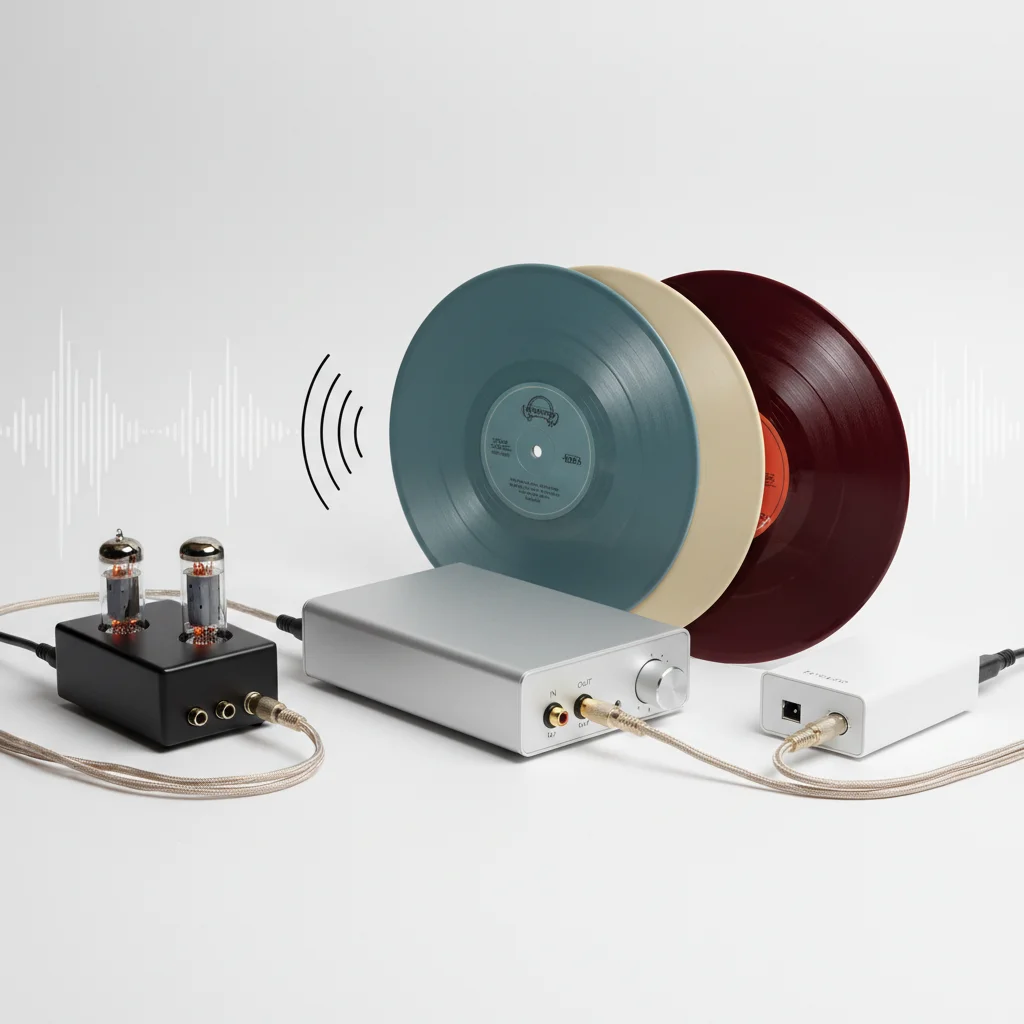
You need a record player preamp if your turntable lacks a built-in phono stage or your amplifier does not have a dedicated phono input. This essential device boosts the tiny signal from your cartridge to a line-level signal, making it audible and correcting the RIAA equalization curve for accurate playback. Without a preamp, your music will sound thin, quiet, and lack bass, significantly impacting the listening experience.
What is a Phono Preamp and Why is it Essential?
A phono preamp, also known as a phono stage, is an electronic circuit designed to perform two critical functions. First, it amplifies the very low-level electrical signal generated by a turntable’s cartridge to a standard line-level signal, which is what most amplifiers and receivers expect. This amplification is significant, often increasing the signal by a factor of 100 or more. Second, and equally important, the preamp applies the RIAA equalization curve. This curve is an industry standard that dictates how records are cut and played back. During mastering, bass frequencies are reduced, and treble frequencies are boosted to allow for longer playing times and prevent the needle from jumping out of the groove. The phono preamp reverses this process, restoring the original frequency balance and ensuring your music sounds as the artist intended. For expert record players reviews on this site.
Identifying the Need for an External Preamp
Determining if you need an external preamp is straightforward. Check your turntable’s specifications: many modern turntables, especially those marketed as ‘plug-and-play’ or ‘USB turntables,’ have a built-in phono preamp. These often have a switch on the back labeled ‘Phono/Line’ or ‘Preamp On/Off.’ If your turntable has this feature and it’s switched to ‘Line’ or ‘On,’ you likely don’t need an external one. Next, examine your amplifier or receiver. Look for an input specifically labeled ‘Phono.’ If your amplifier has this input, it contains an internal phono stage, and you can connect your turntable directly to it. If your turntable lacks a built-in preamp and your amplifier only has inputs like ‘CD,’ ‘Aux,’ or ‘Tuner,’ then an external phono preamp is a necessary component for your setup.
Types of Phono Preamps: MM vs. MC
|
Our Picks for the Best Record Player in 2026
As an Amazon Associate I earn from qualifying purchases.
|
||
| Num | Product | Action |
|---|---|---|
| 1 | Vinyl Record Player with Dual Stereo Bookshelf Speakers Vintage Turntable with Bluetooth Wireless Playback Belt Drive 3-Speed Playback Record Player Support RCA Out Auto Stop |

|
| 2 | Vintage Record Player with External Speakers Belt-Drive Turntable for Vinyl Records Dual Stereo Speakers LP Players Support 3 Speed 3 Size Wireless Playback AUX Headphone Input Auto Stop Wood Red |
|
| 3 | SoulBox S1 Vinyl Record Player with Stereo Speakers, Turntable with Built-in Preamp, S-Shaped Tonearm, 33/45 RPM - Walnut |
|
| 4 | Vinyl Record Player 3-Speed Bluetooth Suitcase Portable Belt-Driven Record Player with Built-in Speakers RCA Line Out AUX in Headphone Jack Vintage Turntable |
|
| 5 | Audio-Technica AT-LP60X-GM Fully Automatic Belt-Drive Stereo Turntable, Gunmetal/Black, Hi-Fidelity, Plays 33-1/3 and 45 RPM Vinyl Records, Dust Cover, Anti-Resonance, Die-Cast Aluminum Platter |
|
| 6 | Victrola Journey Bluetooth Portable Suitcase Record Player – with Built-in Speakers, 3 Speed Vinyl Record Player, RCA Out, Headphone Jack (Smoky Blue) |
|
| 7 | Audio-Technica AT-LP60X-BK Fully Automatic Belt-Drive Stereo Turntable, Black, Hi-Fi, 2 Speed, Dust Cover, Anti-Resonance, Die-Cast Aluminum Platter |
|
| 8 | Victrola The Quincy 6-in-1 Bluetooth Record Player & Multimedia Center with Built-in Speakers – 3-Speed Turntable, CD & Cassette Player, AM/FM Radio, Wireless Music Streaming (Mahogony) |
|
| 9 | Vinyl Record Player Turntable with Built-in Bluetooth Receiver & 2 Stereo Speakers, 3 Speed 3 Size Portable Retro Record Player for Entertainment and Home Decoration |
|
| 10 | Vinyl Record Player with Speakers Vintage Turntable for Vinyls Records Belt-Driven Turn Table Support 3-Speed, Wireless Playback, Headphone, AUX-in, RCA Line LP Phonograph for Sound Enjoyment Black |
|
Phono preamps are typically designed to work with either Moving Magnet (MM) or Moving Coil (MC) cartridges, or sometimes both. Moving Magnet cartridges are the most common type, found on many entry-level and mid-range turntables. They produce a higher output voltage, requiring less gain from the preamp. Moving Coil cartridges, on the other hand, are generally found on higher-end turntables and produce a much lower output voltage. This means MC cartridges require significantly more gain from the preamp to reach line level. Some preamps are switchable, offering settings for both MM and MC, providing versatility for different cartridge types. It’s crucial to match your preamp to your cartridge type for optimal performance and to avoid signal distortion or insufficient volume.
Connecting Your Phono Preamp for Optimal Sound
The connection process for an external phono preamp is simple. First, connect your turntable’s RCA cables to the ‘Input’ jacks on the phono preamp. Ensure the ground wire from your turntable is securely connected to the ground terminal on the preamp to prevent hum. Next, connect a new set of RCA cables from the ‘Output’ jacks of the phono preamp to an available line-level input on your amplifier or receiver, such as ‘Aux,’ ‘CD,’ or ‘Tuner.’ Do NOT connect the preamp’s output to an amplifier’s ‘Phono’ input, as this would result in double amplification and distorted sound. Once everything is connected, power on your components, and you should be ready to enjoy your vinyl collection with clear, balanced audio.
- Ensure your turntable’s ground wire is connected to the preamp.
- Match the preamp’s cartridge setting (MM/MC) to your turntable’s cartridge.
- Connect the preamp’s output to a line-level input on your amplifier.
- Avoid connecting an external preamp to an amplifier’s built-in phono input.
- Test connections and adjust volume carefully to prevent speaker damage.
Choosing the Right Preamp for Your Setup
Selecting the right phono preamp involves considering several factors, including your budget, the type of cartridge you have, and your desired sound quality. Entry-level preamps offer a significant improvement over no preamp at all and are perfect for casual listeners. Mid-range options provide better components, quieter operation, and often more detailed sound. High-end preamps cater to audiophiles, offering advanced circuitry, external power supplies, and precise adjustments for various cartridge parameters. Always check compatibility with your existing turntable and amplifier. Reading reviews and comparing specifications can help you find a preamp that complements your system and enhances your listening experience without breaking the bank.A good preamp can truly transform the sound of your vinyl, bringing out nuances you might have missed before.
Frequently Asked Questions
What is the main purpose of a phono preamp in a record player setup?
The main purpose of a phono preamp is to amplify the low-level signal from a turntable's cartridge to a standard line-level signal and apply the RIAA equalization curve. This process ensures the music is audible and has the correct frequency balance as intended by the artist.
How can I tell if my turntable or amplifier has a built-in phono preamp?
Check your turntable for a 'Phono/Line' switch or 'Preamp On/Off' label. For your amplifier, look for an input specifically labeled 'Phono.' If either component has these features, it likely includes an internal phono stage.
What is the difference between Moving Magnet (MM) and Moving Coil (MC) preamps?
Moving Magnet (MM) preamps are for common cartridges with higher output, requiring less gain. Moving Coil (MC) preamps are for higher-end cartridges with much lower output, needing significantly more gain. Matching the preamp to your cartridge type is crucial for optimal sound.
Can I connect an external phono preamp to an amplifier's phono input?
No, you should NOT connect an external phono preamp's output to an amplifier's 'Phono' input. Doing so would result in double amplification, leading to distorted sound and potentially damaging your equipment. Always connect the preamp's output to a line-level input like 'Aux' or 'CD'.
What factors should I consider when choosing a phono preamp?
When choosing a phono preamp, consider your budget, the type of cartridge you have (MM or MC), and your desired sound quality. Entry-level preamps offer basic improvement, while mid-range and high-end options provide better components and more detailed sound for audiophiles.
Connect Your Phono Preamp for Optimal Sound
Connecting an external phono preamp correctly is essential for clear, balanced audio from your record player. Follow these steps to ensure proper setup and avoid distortion.
First, connect your turntable's RCA cables to the 'Input' jacks on the phono preamp. Ensure the ground wire from your turntable is securely connected to the ground terminal on the preamp to prevent any unwanted hum or noise.
Next, connect a new set of RCA cables from the 'Output' jacks of the phono preamp to an available line-level input on your amplifier or receiver. Use inputs such as 'Aux,' 'CD,' or 'Tuner,' but specifically avoid using the amplifier's 'Phono' input.
Once all connections are secure, power on your components. Carefully test the audio by playing a record and adjusting the volume. This ensures everything is working correctly and helps prevent speaker damage from sudden loud signals.

I was so confused about why my new turntable sounded so quiet and thin, even through my good speakers. This really clarified that I needed a phono stage. I picked up one of the recommended external preamps and the difference is night and day. My records finally have that rich bass and full sound I was looking for. Definitely an essential piece of equipment!
My vintage amplifier doesn’t have a dedicated phono input, so I knew I needed something. This explained the RIAA equalization curve correction really well, which I never fully understood before. The sound quality is much improved now, and everything sounds balanced. I’m glad I invested in a decent preamp instead of just cranking the volume.
This was super helpful! My old receiver died, and my new one didn’t have a phono input, so my records were unlistenable. Understanding how the preamp boosts the signal to line-level made so much sense. I got one of the mid-range options mentioned, and my vinyl collection sounds fantastic again. It’s amazing how much of a difference it makes.
I got a budget turntable that supposedly had a built-in preamp, but the sound was still pretty weak. After reading this, I realized it might not be doing enough. I bought an entry-level external preamp, and while it’s better, I still feel like the amplification could be stronger. It’s an improvement, but maybe I should have splurged a bit more.