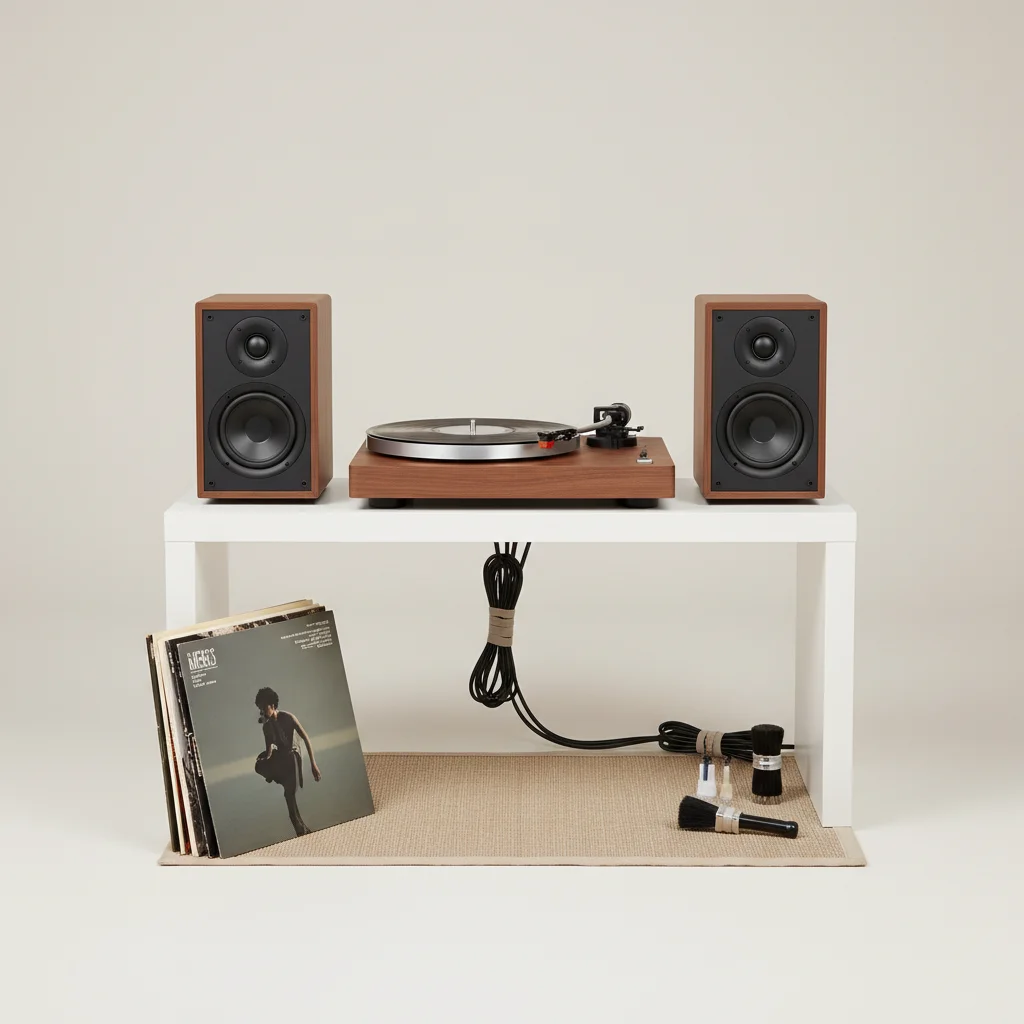
Achieving optimal sound quality from your record player involves several key setup steps, from proper placement to fine-tuning your cartridge. By following a methodical approach, you can significantly enhance your listening experience and ensure your vinyl collection sounds its best. There are five critical areas to focus on for an ideal record player setup.
Choosing the Right Location for Your Turntable
The placement of your record player is more crucial than many realize. A stable, level surface is paramount to prevent vibrations from interfering with playback. Avoid placing your turntable on the same surface as your speakers, as acoustic feedback can cause distortion and even damage. Consider a dedicated audio rack or a sturdy wall-mounted shelf. Ensure the location is free from direct sunlight and excessive dust, which can degrade your records and equipment over time.
Balancing the Tonearm and Setting Tracking Force
Proper tonearm balance and tracking force are fundamental for accurate playback and to prevent undue wear on your records and stylus. First, balance the tonearm so it floats freely, then set the recommended tracking force using the counterweight and tracking force dial, typically found in your cartridge’s specifications. Incorrect tracking force can lead to skipping, distortion, and premature stylus wear. Always refer to your cartridge manufacturer’s guidelines for the precise setting.
Aligning Your Cartridge for Precision Playback
|
Our Picks for the Best Record Player in 2026
As an Amazon Associate I earn from qualifying purchases.
|
||
| Num | Product | Action |
|---|---|---|
| 1 | Victrola The Quincy 6-in-1 Bluetooth Record Player & Multimedia Center with Built-in Speakers – 3-Speed Turntable, CD & Cassette Player, AM/FM Radio, Wireless Music Streaming (Mahogony) |

|
| 2 | Vinyl Record Player with Dual Stereo Bookshelf Speakers Vintage Turntable with Bluetooth Wireless Playback Belt Drive 3-Speed Playback Record Player Support RCA Out Auto Stop |
|
| 3 | Victrola Journey Bluetooth Portable Suitcase Record Player – with Built-in Speakers, 3 Speed Vinyl Record Player, RCA Out, Headphone Jack (Smoky Blue) |
|
| 4 | Vinyl Record Player with Speakers Vintage Turntable for Vinyls Records Belt-Driven Turn Table Support 3-Speed, Wireless Playback, Headphone, AUX-in, RCA Line LP Phonograph for Sound Enjoyment Black |
|
| 5 | SoulBox S1 Vinyl Record Player with Stereo Speakers, Turntable with Built-in Preamp, S-Shaped Tonearm, 33/45 RPM - Walnut |
|
| 6 | Vintage Record Player with External Speakers Belt-Drive Turntable for Vinyl Records Dual Stereo Speakers LP Players Support 3 Speed 3 Size Wireless Playback AUX Headphone Input Auto Stop Wood Red |
|
| 7 | Vinyl Record Player Turntable with Built-in Bluetooth Receiver & 2 Stereo Speakers, 3 Speed 3 Size Portable Retro Record Player for Entertainment and Home Decoration |
|
| 8 | Vinyl Record Player 3-Speed Bluetooth Suitcase Portable Belt-Driven Record Player with Built-in Speakers RCA Line Out AUX in Headphone Jack Vintage Turntable |
|
| 9 | Audio-Technica AT-LP60X-BK Fully Automatic Belt-Drive Stereo Turntable, Black, Hi-Fi, 2 Speed, Dust Cover, Anti-Resonance, Die-Cast Aluminum Platter |
|
| 10 | Audio-Technica AT-LP60X-GM Fully Automatic Belt-Drive Stereo Turntable, Gunmetal/Black, Hi-Fidelity, Plays 33-1/3 and 45 RPM Vinyl Records, Dust Cover, Anti-Resonance, Die-Cast Aluminum Platter |
|
Cartridge alignment ensures the stylus tracks the record groove accurately, minimizing distortion and maximizing stereo separation. This often involves using an alignment protractor to set the overhang and zenith. While it can seem daunting, a correctly aligned cartridge makes a noticeable difference in sound clarity and detail. Many turntables come with a basic protractor, or you can purchase more precise tools for a truly optimized setup.
Connecting Your Components: Preamp, Amplifier, and Speakers
The signal chain from your record player to your speakers is critical. Most turntables require a phono preamp to boost the low-level signal from the cartridge to a line-level signal. Some turntables have a built-in preamp, while others require an external unit. This signal then goes to an amplifier, which powers your speakers. Ensure all connections are secure and correctly phased (positive to positive, negative to negative) to avoid hum or phase issues. The quality of your cables can also subtly impact the final sound.
- Ensure all cables are securely connected.
- Match impedance between components where applicable.
- Use shielded cables to minimize interference.
- Keep power cables separate from signal cables.
- Test each component individually if troubleshooting.
Fine-Tuning and Troubleshooting Common Issues
Once your record player is set up, a final listening test can reveal any minor adjustments needed. Listen for any hum, distortion, or channel imbalance. Common issues include ground loop hum (often resolved by ensuring proper grounding), static electricity (addressed with anti-static brushes or mats), and skipping (which could indicate incorrect tracking force or a dirty stylus). Don’t be afraid to experiment with small adjustments to find the sweet spot for your specific setup and listening environment.A well-maintained and correctly set up record player will provide years of enjoyable listening.
