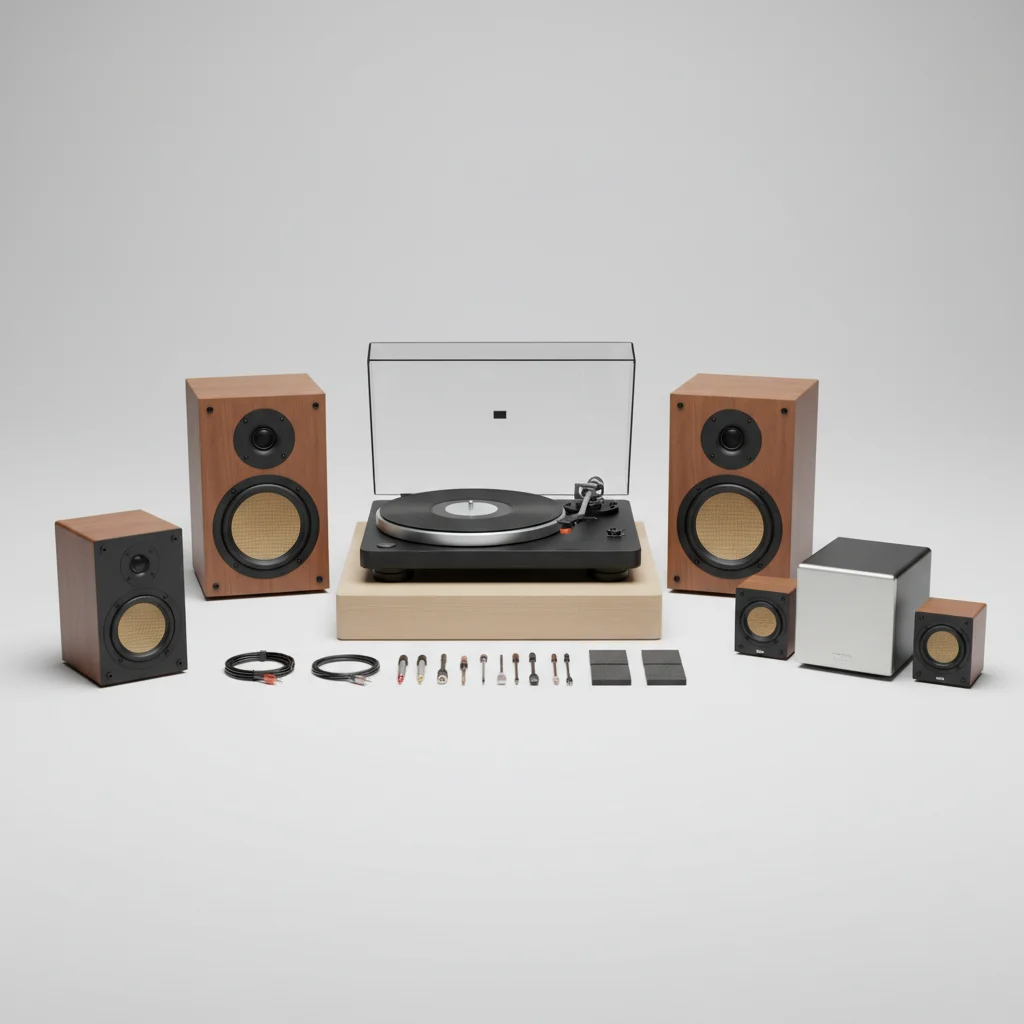
When setting up your record player, you might wonder how many speakers are truly necessary for an optimal listening experience. For most casual listeners and audiophiles, a stereo setup with two speakers is ideal, providing a rich, immersive soundstage that accurately reproduces the artist’s original intent. While some setups might incorporate more, two speakers offer the best balance of sound quality, simplicity, and cost-effectiveness for home listening.
Understanding Stereo Sound for Record Players
Stereo sound is fundamental to how music is recorded and enjoyed. It involves two independent audio channels, left and right, which are designed to be played through two separate speakers. This creates the illusion of sound coming from different directions, mimicking how we hear in the real world. For record players, the stylus reads these two distinct channels from the vinyl groove, sending separate signals to your amplifier or receiver, which then powers the left and right speakers.
The beauty of a stereo setup lies in its ability to create depth and width in the sound. Instruments and vocals can be panned to specific locations within the soundstage, making it feel like the musicians are performing in front of you. This spatial information is crucial for appreciating the nuances of a recording, from the subtle placement of a guitar riff to the expansive feel of an orchestral piece.
The Benefits of a Two-Speaker Setup
A two-speaker stereo setup offers numerous advantages for record player enthusiasts. Firstly, it’s the most common and widely supported configuration for music playback, meaning the vast majority of vinyl records are mixed and mastered with stereo listening in mind. This ensures you’re hearing the music as the artists and producers intended.
Secondly, two speakers provide excellent sound imaging and separation. You can clearly distinguish between different instruments and vocal lines, preventing the sound from becoming muddled or indistinct. This clarity is especially important for audiophiles who want to hear every detail in their favorite recordings. Furthermore, a well-placed pair of speakers can fill a room with sound more effectively than a single speaker, creating a more enveloping listening experience.
- Accurate soundstage reproduction
- Clear instrument separation
- Optimal for most music recordings
- Simpler setup and less clutter
- Cost-effective for high-quality sound
When More Than Two Speakers Might Be Considered
|
Our Picks for the Best Record Player in 2026
As an Amazon Associate I earn from qualifying purchases.
|
||
| Num | Product | Action |
|---|---|---|
| 1 | Vinyl Record Player Turntable with Built-in Bluetooth Receiver & 2 Stereo Speakers, 3 Speed 3 Size Portable Retro Record Player for Entertainment and Home Decoration |

|
| 2 | SoulBox S1 Vinyl Record Player with Stereo Speakers, Turntable with Built-in Preamp, S-Shaped Tonearm, 33/45 RPM - Walnut |
|
| 3 | Vintage Record Player with External Speakers Belt-Drive Turntable for Vinyl Records Dual Stereo Speakers LP Players Support 3 Speed 3 Size Wireless Playback AUX Headphone Input Auto Stop Wood Red |
|
| 4 | Vinyl Record Player 3-Speed Bluetooth Suitcase Portable Belt-Driven Record Player with Built-in Speakers RCA Line Out AUX in Headphone Jack Vintage Turntable |
|
| 5 | Victrola The Quincy 6-in-1 Bluetooth Record Player & Multimedia Center with Built-in Speakers – 3-Speed Turntable, CD & Cassette Player, AM/FM Radio, Wireless Music Streaming (Mahogony) |
|
| 6 | Audio-Technica AT-LP60X-BK Fully Automatic Belt-Drive Stereo Turntable, Black, Hi-Fi, 2 Speed, Dust Cover, Anti-Resonance, Die-Cast Aluminum Platter |
|
| 7 | Vinyl Record Player with Speakers Vintage Turntable for Vinyls Records Belt-Driven Turn Table Support 3-Speed, Wireless Playback, Headphone, AUX-in, RCA Line LP Phonograph for Sound Enjoyment Black |
|
| 8 | Victrola Journey Bluetooth Portable Suitcase Record Player – with Built-in Speakers, 3 Speed Vinyl Record Player, RCA Out, Headphone Jack (Smoky Blue) |
|
| 9 | Vinyl Record Player with Dual Stereo Bookshelf Speakers Vintage Turntable with Bluetooth Wireless Playback Belt Drive 3-Speed Playback Record Player Support RCA Out Auto Stop |
|
| 10 | Audio-Technica AT-LP60X-GM Fully Automatic Belt-Drive Stereo Turntable, Gunmetal/Black, Hi-Fidelity, Plays 33-1/3 and 45 RPM Vinyl Records, Dust Cover, Anti-Resonance, Die-Cast Aluminum Platter |
|
While two speakers are generally sufficient, there are niche scenarios where more might be considered. For instance, some home theater enthusiasts might integrate their record player into a surround sound system. In such cases, the amplifier would distribute the stereo signal to multiple speakers, potentially including a center channel, rear speakers, and a subwoofer. However, it’s important to note that this often involves converting the stereo signal into a multi-channel format, which can sometimes alter the original stereo imaging of the music.
Another less common approach involves using multiple stereo pairs in very large rooms or commercial spaces to ensure even sound distribution. This isn’t about enhancing the stereo image but rather about ensuring that the sound reaches all corners of a vast area. For the typical home listening environment, however, adding more speakers beyond a stereo pair for a record player often introduces unnecessary complexity and can even detract from the intended stereo sound.
Choosing the Right Speakers for Your Turntable
Once you’ve decided on a two-speaker setup, the next step is choosing the right speakers. There are two main types: passive and active. Passive speakers require an external amplifier or receiver to power them, offering flexibility in component matching. Active (or powered) speakers have built-in amplifiers, simplifying your setup. The choice depends on your budget, space, and desired level of customization.
Consider factors like speaker size, frequency response, and impedance. Bookshelf speakers are popular for their compact size and excellent sound, while floor-standing speakers offer a fuller sound with deeper bass, often suitable for larger rooms. Always ensure your speakers are compatible with your amplifier or receiver if you’re going with a passive setup.Investing in quality speakers that match your record player and amplifier will significantly enhance your listening pleasure, allowing you to fully appreciate the warmth and detail of vinyl playback.
Optimizing Your Two-Speaker Setup
Even with just two speakers, proper placement is crucial for achieving the best sound. Ideally, your speakers and listening position should form an equilateral triangle. This means the distance between the two speakers should be roughly equal to the distance from each speaker to your listening spot. Experiment with toe-in, which is the angle at which the speakers are pointed towards your listening position, to fine-tune the soundstage and imaging.
Also, consider the acoustics of your room. Hard surfaces can cause reflections, leading to a harsh or echoey sound, while soft furnishings can absorb sound, making it sound dull. Strategic placement of rugs, curtains, and even bookshelves can help optimize your room’s acoustics. By paying attention to these details, you can maximize the performance of your two-speaker setup and enjoy your vinyl collection to its fullest potential.
