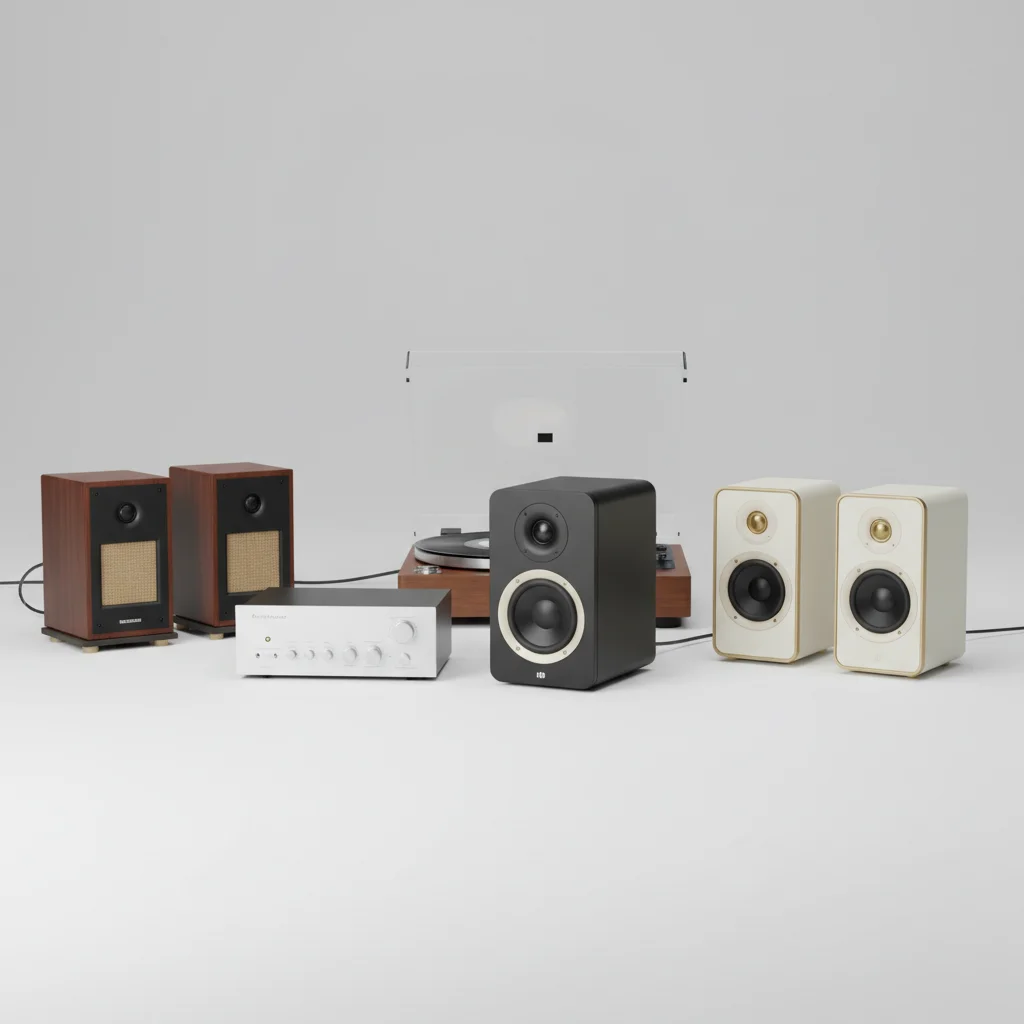
When choosing speakers for your record player, understanding the three main types—powered, passive, and all-in-one systems—is crucial for achieving optimal sound quality and a seamless listening experience. Each type offers distinct advantages and considerations regarding setup, additional components, and overall audio performance. Selecting the right speaker system depends on your budget, space constraints, and desired level of audio fidelity.
Powered Speakers for Record Players
Powered speakers, also known as active speakers, are a popular choice for record player setups due to their integrated amplification. This means they have a built-in amplifier, eliminating the need for a separate receiver or amplifier unit. This simplifies your setup considerably, reducing cable clutter and the number of components required. Many powered speakers also include a built-in phono preamp, which is essential for boosting the low-level signal from your turntable to a line-level signal that the speakers can process. If your turntable or speakers lack a phono preamp, you’ll need an external one. For expert record players reviews on this site.
The convenience of powered speakers makes them ideal for beginners or those seeking a minimalist audio system. They often come with various input options, including RCA, optical, and Bluetooth, offering versatility beyond just your record player. However, while convenient, the integrated amplifier might not offer the same upgrade flexibility as a separate component system.
Passive Speakers and Separate Components
Passive speakers require an external amplifier or receiver to power them. Unlike powered speakers, they do not have built-in amplification. This setup offers greater flexibility and upgrade potential, as you can mix and match different amplifiers and speakers to fine-tune your sound. Audiophiles often prefer passive setups because they can select components that perfectly complement each other, leading to superior sound reproduction.
A typical passive speaker setup for a record player involves the turntable, a phono preamp (if not integrated into the turntable or receiver), an amplifier or receiver, and the passive speakers. While this requires more components and cabling, it allows for significant customization and the ability to upgrade individual parts of your system over time. This approach is generally recommended for listeners who prioritize audio quality and want the option to expand their system in the future.
All-in-One Record Player Systems
|
Our Picks for the Best Record Player in 2026
As an Amazon Associate I earn from qualifying purchases.
|
||
| Num | Product | Action |
|---|---|---|
| 1 | Vintage Record Player with External Speakers Belt-Drive Turntable for Vinyl Records Dual Stereo Speakers LP Players Support 3 Speed 3 Size Wireless Playback AUX Headphone Input Auto Stop Wood Red |

|
| 2 | Victrola The Quincy 6-in-1 Bluetooth Record Player & Multimedia Center with Built-in Speakers – 3-Speed Turntable, CD & Cassette Player, AM/FM Radio, Wireless Music Streaming (Mahogony) |
|
| 3 | Vinyl Record Player Turntable with Built-in Bluetooth Receiver & 2 Stereo Speakers, 3 Speed 3 Size Portable Retro Record Player for Entertainment and Home Decoration |
|
| 4 | Vinyl Record Player with Speakers Vintage Turntable for Vinyls Records Belt-Driven Turn Table Support 3-Speed, Wireless Playback, Headphone, AUX-in, RCA Line LP Phonograph for Sound Enjoyment Black |
|
| 5 | Vinyl Record Player with Dual Stereo Bookshelf Speakers Vintage Turntable with Bluetooth Wireless Playback Belt Drive 3-Speed Playback Record Player Support RCA Out Auto Stop |
|
| 6 | SoulBox S1 Vinyl Record Player with Stereo Speakers, Turntable with Built-in Preamp, S-Shaped Tonearm, 33/45 RPM - Walnut |
|
| 7 | Audio-Technica AT-LP60X-BK Fully Automatic Belt-Drive Stereo Turntable, Black, Hi-Fi, 2 Speed, Dust Cover, Anti-Resonance, Die-Cast Aluminum Platter |
|
| 8 | Audio-Technica AT-LP60X-GM Fully Automatic Belt-Drive Stereo Turntable, Gunmetal/Black, Hi-Fidelity, Plays 33-1/3 and 45 RPM Vinyl Records, Dust Cover, Anti-Resonance, Die-Cast Aluminum Platter |
|
| 9 | Victrola Journey Bluetooth Portable Suitcase Record Player – with Built-in Speakers, 3 Speed Vinyl Record Player, RCA Out, Headphone Jack (Smoky Blue) |
|
| 10 | Vinyl Record Player 3-Speed Bluetooth Suitcase Portable Belt-Driven Record Player with Built-in Speakers RCA Line Out AUX in Headphone Jack Vintage Turntable |
|
All-in-one record player systems integrate the turntable, amplifier, and speakers into a single unit. These systems are designed for ultimate convenience and simplicity, often featuring a compact design that fits easily into smaller spaces. They are an excellent option for casual listeners, those new to vinyl, or anyone looking for a straightforward plug-and-play solution without the complexity of separate components.
While all-in-one systems offer unparalleled ease of use, they typically come with compromises in sound quality and upgradeability compared to separate component systems. The integrated speakers are often smaller and less powerful, and the internal components may not be of the same caliber as dedicated units. However, for many, the convenience and affordability outweigh these limitations, making them a popular entry point into the world of vinyl.
Key Considerations When Choosing Speakers
When deciding between these three types, several factors should guide your choice:
- Budget: All-in-one systems are generally the most affordable, followed by powered speakers, with passive setups often requiring a larger initial investment due to multiple components.
- Space: All-in-one units are the most compact, while passive systems with separate components require the most space.
- Sound Quality: Passive systems typically offer the best sound quality and upgrade potential, followed by powered speakers, and then all-in-one units.
- Ease of Setup: All-in-one systems are the easiest to set up, followed by powered speakers, with passive systems requiring the most effort.
- Future Upgrades: Passive systems offer the most flexibility for future upgrades, allowing you to replace individual components as your needs or budget evolve.
Understanding these distinctions will help you make an informed decision that aligns with your listening preferences and lifestyle. Whether you prioritize simplicity, sound fidelity, or future flexibility, there’s a speaker solution that’s right for your record player.
