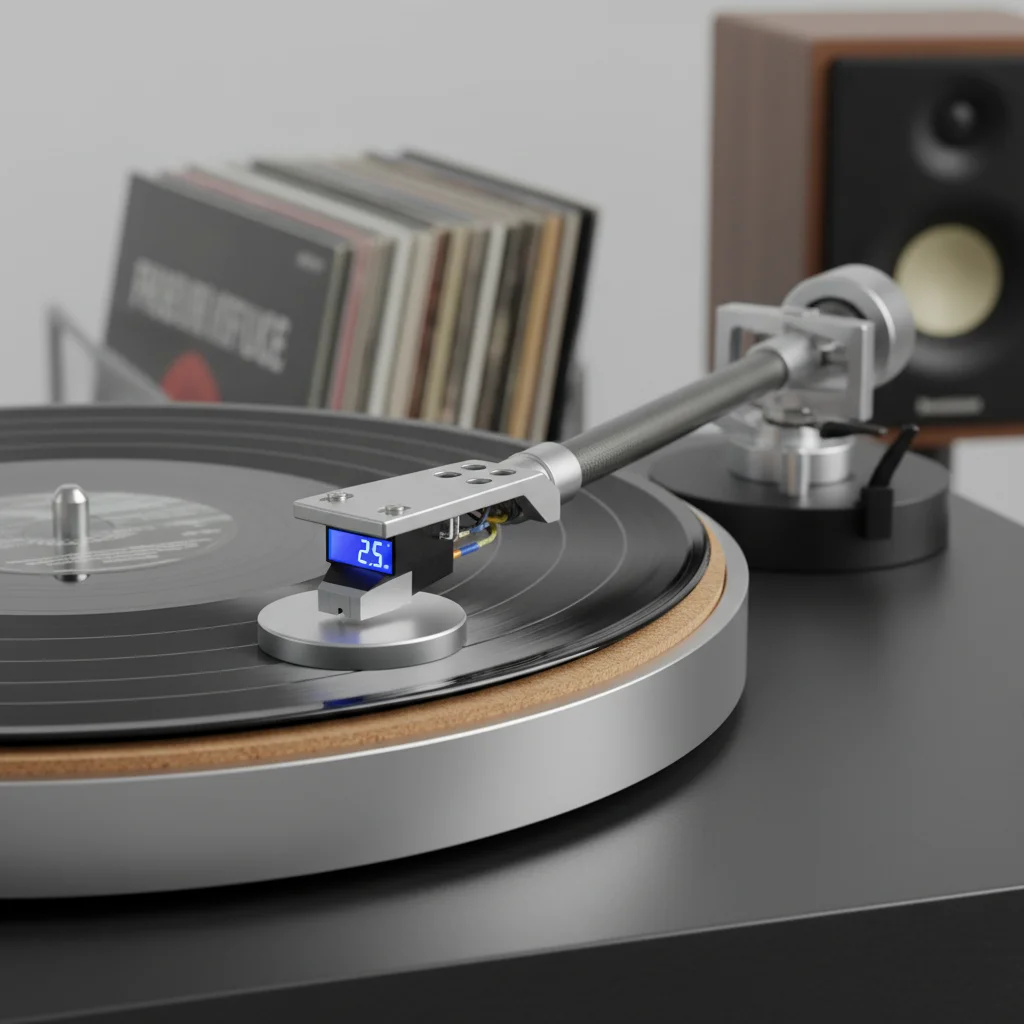
Record player stylus pressure, also known as tracking force, is a critical factor in achieving optimal sound quality and preserving your vinyl records. Incorrect stylus pressure can lead to distorted audio, premature record wear, and even damage to your stylus. Setting it correctly ensures the stylus maintains proper contact with the record groove, allowing for accurate signal retrieval and a balanced sound profile.
Understanding Stylus Pressure and Tracking Force
Stylus pressure refers to the downward force exerted by the tonearm’s stylus onto the record’s groove. This force is typically measured in grams (g). Manufacturers specify a recommended tracking force range for each cartridge, and adhering to this range is crucial. Too little pressure can cause the stylus to skip or jump out of the groove, leading to sibilance and mistracking. Conversely, too much pressure can flatten the delicate grooves of your records and accelerate stylus wear, resulting in a duller sound and reduced lifespan for both your vinyl and cartridge.
How to Set Stylus Pressure Accurately
Setting your record player’s stylus pressure accurately involves a few steps. First, ensure your turntable is level. Next, balance your tonearm so it floats freely, then set the tracking force dial to zero. Finally, rotate the counterweight to apply the recommended tracking force for your specific cartridge, usually found in the cartridge’s manual. Many audiophiles use a digital stylus force gauge for precise measurements, as the markings on some tonearms can be less accurate. This small investment can significantly improve your listening experience and protect your collection.
- Ensure your turntable is perfectly level.
- Balance the tonearm until it floats freely.
- Set the tracking force dial to zero.
- Rotate the counterweight to the recommended gram setting.
- Verify with a digital stylus force gauge for maximum accuracy.
The Impact of Incorrect Stylus Pressure on Sound
|
Our Picks for the Best Record Player in 2026
As an Amazon Associate I earn from qualifying purchases.
|
||
| Num | Product | Action |
|---|---|---|
| 1 | Vinyl Record Player 3-Speed Bluetooth Suitcase Portable Belt-Driven Record Player with Built-in Speakers RCA Line Out AUX in Headphone Jack Vintage Turntable |

|
| 2 | Victrola Journey Bluetooth Portable Suitcase Record Player – with Built-in Speakers, 3 Speed Vinyl Record Player, RCA Out, Headphone Jack (Smoky Blue) |
|
| 3 | Vinyl Record Player with Speakers Vintage Turntable for Vinyls Records Belt-Driven Turn Table Support 3-Speed, Wireless Playback, Headphone, AUX-in, RCA Line LP Phonograph for Sound Enjoyment Black |
|
| 4 | Vinyl Record Player with Dual Stereo Bookshelf Speakers Vintage Turntable with Bluetooth Wireless Playback Belt Drive 3-Speed Playback Record Player Support RCA Out Auto Stop |
|
| 5 | Victrola The Quincy 6-in-1 Bluetooth Record Player & Multimedia Center with Built-in Speakers – 3-Speed Turntable, CD & Cassette Player, AM/FM Radio, Wireless Music Streaming (Mahogony) |
|
| 6 | SoulBox S1 Vinyl Record Player with Stereo Speakers, Turntable with Built-in Preamp, S-Shaped Tonearm, 33/45 RPM - Walnut |
|
| 7 | Audio-Technica AT-LP60X-BK Fully Automatic Belt-Drive Stereo Turntable, Black, Hi-Fi, 2 Speed, Dust Cover, Anti-Resonance, Die-Cast Aluminum Platter |
|
| 8 | Vinyl Record Player Turntable with Built-in Bluetooth Receiver & 2 Stereo Speakers, 3 Speed 3 Size Portable Retro Record Player for Entertainment and Home Decoration |
|
| 9 | Audio-Technica AT-LP60X-GM Fully Automatic Belt-Drive Stereo Turntable, Gunmetal/Black, Hi-Fidelity, Plays 33-1/3 and 45 RPM Vinyl Records, Dust Cover, Anti-Resonance, Die-Cast Aluminum Platter |
|
| 10 | Vintage Record Player with External Speakers Belt-Drive Turntable for Vinyl Records Dual Stereo Speakers LP Players Support 3 Speed 3 Size Wireless Playback AUX Headphone Input Auto Stop Wood Red |
|
The sonic consequences of incorrect stylus pressure are immediately noticeable. If the pressure is too light, you’ll likely hear a thin, bright, and distorted sound, particularly in louder passages. The bass response will be weak, and vocals might sound harsh. Too much pressure, on the other hand, can result in a muddy, muffled sound with reduced high-frequency detail. The soundstage may collapse, and the overall presentation will lack vibrancy. Proper tracking force allows the stylus to trace the groove walls precisely, reproducing the full frequency range and dynamic nuances of your music.
Protecting Your Records and Stylus
Beyond sound quality, correct stylus pressure is vital for the longevity of your vinyl records and stylus. An improperly set tonearm can cause irreversible damage. Light tracking can lead to groove wear from the stylus bouncing around, while heavy tracking can physically deform the grooves. A worn or damaged stylus, often a result of incorrect pressure, can also inflict significant damage on your records. Regularly checking and adjusting your stylus pressure, along with keeping your stylus clean, are fundamental practices for any vinyl enthusiast. Consider investing in a high-quality digital stylus force gauge for consistent accuracy.
When to Recheck and Adjust Stylus Pressure
It’s not a set-it-and-forget-it adjustment. You should recheck your stylus pressure whenever you change cartridges, replace your stylus, or move your turntable. Even minor vibrations during transport can subtly alter the tonearm’s balance. Additionally, if you notice any degradation in sound quality, such as increased distortion or sibilance, or if your stylus starts skipping, checking the tracking force should be one of your first troubleshooting steps. Regular maintenance, including a quick check of your stylus pressure every few months, will ensure your system continues to perform at its best.

I’m pretty new to the world of record players, and the concept of tracking force was a bit intimidating. This explanation made it super clear why it’s so important for accurate signal retrieval. I feel much more confident now about setting up my new turntable correctly to get that balanced sound profile everyone talks about.
This was a really helpful reminder about preserving my vinyl. I’ve been noticing some premature wear on a few of my favorite LPs, and it never occurred to me that too much pressure could be the culprit. I’m going to re-check my setup this weekend and make sure I’m not flattening those delicate grooves. Thanks for the detailed explanation!
I appreciate the breakdown of why stylus pressure matters. I tried adjusting mine to the manufacturer’s recommended range, but I’m still getting some occasional skipping on certain records. It’s better than before, but I was hoping for a complete fix. Maybe my tonearm just isn’t as precise as it should be.
I always just eyeballed my tracking force before, but after reading about how much it impacts sound quality, I finally invested in a digital gauge. What a difference! My records sound so much clearer now, especially the older ones that used to have a bit of sibilance. It’s amazing how a small adjustment can make such a huge improvement.