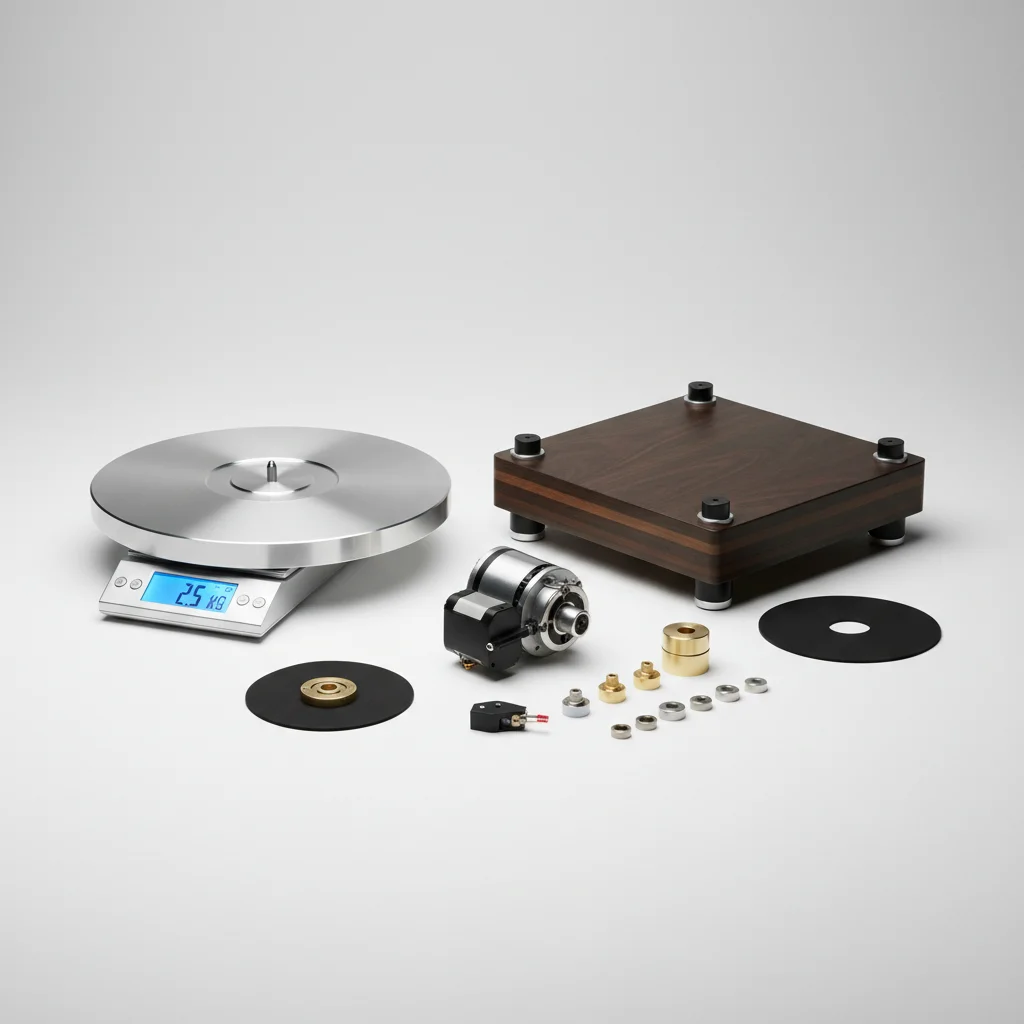
The weight of a record player can significantly affect its sound quality, primarily through its impact on resonance and stability. Generally, a heavier turntable chassis and platter contribute to better sound by reducing unwanted vibrations and providing a more stable platform for the stylus to track the grooves. This enhanced stability can lead to a clearer, more detailed audio reproduction with improved bass response and reduced distortion.
Understanding Turntable Mass and Resonance
Turntable mass refers to the overall weight of the record player, including its plinth, platter, and motor assembly. A heavier plinth, often made from dense materials like MDF, acrylic, or even metal, is less susceptible to external vibrations and acoustic feedback. These vibrations, if not properly damped, can be picked up by the stylus, introducing unwanted noise and muddying the sound. Increased mass helps to absorb and dissipate these energy waves, preventing them from reaching the sensitive cartridge.
The Role of Platter Weight in Playback
The platter, the circular component on which the record rests, is another critical area where weight plays a significant role. A heavier platter possesses greater rotational inertia, meaning it is more resistant to speed fluctuations caused by motor inconsistencies or stylus drag. This leads to more consistent rotational speed, known as wow and flutter, which directly impacts pitch stability and overall musicality. Materials like acrylic, aluminum, or even glass are commonly used for platters, with heavier options often preferred by audiophiles for their superior performance.
- Reduced susceptibility to external vibrations.
- Improved rotational speed stability.
- Enhanced bass response and clarity.
- Lowered risk of acoustic feedback.
- More accurate stylus tracking.
Isolation and Damping Techniques
|
Our Picks for the Best Record Player in 2026
As an Amazon Associate I earn from qualifying purchases.
|
||
| Num | Product | Action |
|---|---|---|
| 1 | Vinyl Record Player with Dual Stereo Bookshelf Speakers Vintage Turntable with Bluetooth Wireless Playback Belt Drive 3-Speed Playback Record Player Support RCA Out Auto Stop |

|
| 2 | Vintage Record Player with External Speakers Belt-Drive Turntable for Vinyl Records Dual Stereo Speakers LP Players Support 3 Speed 3 Size Wireless Playback AUX Headphone Input Auto Stop Wood Red |
|
| 3 | Vinyl Record Player with Speakers Vintage Turntable for Vinyls Records Belt-Driven Turn Table Support 3-Speed, Wireless Playback, Headphone, AUX-in, RCA Line LP Phonograph for Sound Enjoyment Black |
|
| 4 | Vinyl Record Player 3-Speed Bluetooth Suitcase Portable Belt-Driven Record Player with Built-in Speakers RCA Line Out AUX in Headphone Jack Vintage Turntable |
|
| 5 | Victrola The Quincy 6-in-1 Bluetooth Record Player & Multimedia Center with Built-in Speakers – 3-Speed Turntable, CD & Cassette Player, AM/FM Radio, Wireless Music Streaming (Mahogony) |
|
| 6 | Victrola Journey Bluetooth Portable Suitcase Record Player – with Built-in Speakers, 3 Speed Vinyl Record Player, RCA Out, Headphone Jack (Smoky Blue) |
|
| 7 | Vinyl Record Player Turntable with Built-in Bluetooth Receiver & 2 Stereo Speakers, 3 Speed 3 Size Portable Retro Record Player for Entertainment and Home Decoration |
|
| 8 | SoulBox S1 Vinyl Record Player with Stereo Speakers, Turntable with Built-in Preamp, S-Shaped Tonearm, 33/45 RPM - Walnut |
|
| 9 | Audio-Technica AT-LP60X-GM Fully Automatic Belt-Drive Stereo Turntable, Gunmetal/Black, Hi-Fidelity, Plays 33-1/3 and 45 RPM Vinyl Records, Dust Cover, Anti-Resonance, Die-Cast Aluminum Platter |
|
| 10 | Audio-Technica AT-LP60X-BK Fully Automatic Belt-Drive Stereo Turntable, Black, Hi-Fi, 2 Speed, Dust Cover, Anti-Resonance, Die-Cast Aluminum Platter |
|
Beyond the inherent weight of the components, effective isolation and damping techniques are crucial for maximizing sound quality. Many high-end record players incorporate sophisticated suspension systems, isolation feet, and multi-layered plinths to further minimize vibrations. These design elements work in conjunction with the mass of the turntable to create an acoustically inert environment for the vinyl playback. Consider upgrading your record player’s isolation feet for noticeable improvements.
Impact on Different Record Player Types
The importance of weight can vary slightly across different types of record players. For direct-drive turntables, where the motor is directly connected to the platter, a heavier platter can help smooth out any minor motor pulsations. Belt-drive turntables, which use a belt to connect the motor to the platter, also benefit from heavier platters for consistent speed. Entry-level record players, often lighter in construction, can sometimes be improved with aftermarket accessories like heavier platter mats or isolation platforms to mitigate some of their inherent vibrational weaknesses.
Balancing Weight with Practicality
While a heavier record player generally offers sonic advantages, there’s a practical limit. Extremely heavy turntables can be difficult to move and may require specialized furniture to support their weight. Manufacturers strive to find an optimal balance between mass, material science, and user convenience to deliver the best possible sound quality without making the product unwieldy. Ultimately, the ideal record player weight is one that effectively minimizes unwanted resonances and maintains stable playback, contributing to a truly immersive listening experience.

I appreciate the breakdown on how record player weight affects sound quality. It makes sense that a more stable platform would improve tracking. My only minor complaint is that while it explains the benefits of heavier components, it doesn’t really touch on the practical downsides for someone with limited space or who needs to move their setup occasionally. Still, good info on resonance.
I always wondered why some turntables just sounded ‘better’ even with the same cartridge. The explanation about how a heavier plinth, especially one made from dense materials like MDF or acrylic, reduces external vibrations really clicked for me. My old lightweight player always had issues with bass response, and now I understand why. Definitely investing in a more substantial model next time.
This was super helpful in understanding the impact of turntable mass. I’ve been eyeing a new player and was debating between a few models. Knowing that increased mass helps with stability and reduces distortion is a game-changer for my decision. I’m aiming for something with a heavier platter to get that clearer, more detailed audio reproduction.
Fantastic insights! I’ve always prioritized the cartridge, but never really thought about the chassis and platter weight as much. The point about how a heavier turntable reduces unwanted vibrations and acoustic feedback is something I’ve definitely experienced with cheaper players. My current setup has a pretty solid motor assembly and I can really hear the difference in sound clarity.